Z4M engine failure - repair and uprgrade advice

Yes I know it has a oil temp gauge, but normally the oil temp sensor sits in the back of the oil filter housing. The S54 only has an oil pressure sensor, and the other hole is a blank (I saw that on another forum where someone installed another sensor and I asked where because I thought both holes would be in use but it appears its not).

The coolant sensor in the return pipe is named "oil/water temp sensor" but it sits in coolant.
Maybe there is another sensor that also measures temperature but is not listed as such?

Erratic oil temp is strange. There is of course a cooler and thermostat (also for the oil), but its a very straightforeward system. I dont know if it has problems with trapped air. But keep a good eye on the oil level if the temp is erratic. No oil pressure can get expensive... There is of course a light for that too, but that can be broken.
However the oil temp gauge (and in normal bmw's the water temp gauge) are 'dampened gauges', so the temperature displayed is not the actual temperature. It has electronics that evens out the actual values. (tbh I dont like those systems because it doesnt really tell whats going on)
 
This kind of explains it.

This is from BMW Vehicle Communication Software Manual August 2009 EAZ0025B42B Rev. A

OIL TEMPERATURE(°)
Range: _________________________________________ –40 to 199°C or –40 to 389°F

These ECM-calculated parameters indicate the engine oil temperature (EOT) based on the signal voltage from the EOT sensor.

The electronic level sensor is located in the engine sump mounted to the engine oil pan.

The probe of the level sensor contains two temperature-sensing elements.

• One senses the engine oil temperature.

• The other is heated to 50°F (10°C) above the temperature of the engine and then is allowed to cool.

The length of time it takes to cool the heated element is how the sensor determines the engine oil level.

When the oil level is high, it covers a larger portion of the probe submersed in the oil sump.

The engine oil around the probe absorbs the heat of the heated element more quickly than if the level is low.

The microprocessor in the base of the sensor produces a pulse width modulated signal proportional to the oil level.

The pulse width decreases with a decreased level of oil.

The engine control module uses the EOT input signal to protect the engine during the cold engine warm-up phase.

On some models, the visual warning LEDs in the tachometer will illuminate at cold engine start up and slowly be extinguished as the oil temperature increases.

The EOT sensor may also serve as an important input for VANOS operation, varying the solenoid control based on oil temperature because oil temperature/viscosity effects camshaft movement reaction time.

In the event of a oil temp/level sensor fault, the coolant temperature sensor reading may be used as the substituted value.
 
So the level sensor doubles as a temp sensor.

Never knew that the level sensor worked in that manner.

But this is unclear:

"In the event of a oil temp/level sensor fault, the coolant temperature sensor reading may be used as the substituted value."

Does the ecu do that automatically? when the level sender doesnt function properly it uses the data of the water temp sensor?
And no check engine light?
That could also be a pointer why the oil temp gauge now reacts differently (usually coolant temp gauges rise faster after cold start than oil temp gauges).

Maybe some deeper diagnoses (inpa/dis/ista) can solve this.
 
tomTVR said:
TomK said:
Are you referring to the temp dial below the rev counter? That's oil temp not coolant, there is no coolant gauge unless you're monitoring externally? Generally once warmed with average driving that should sit at about 11 o'clock.

Yes I must mean the oil tempature then. Yes it's about 11 o'clock most of the time but it seems to rise to just past 12 o'clock in traffic or when you give it some welly. I'm sure previously it never moved.

Tom, this is unrelated, but are you aware the nuts on your struts are wrong? When I say "wrong", I mean not standard and don't look like they have the washer part adjoined as on standard cars?
 
Good news, I bled a load of air out of the system today and temperatures seem to have stablised although I'll keep checking it.

Regarding the AC it turns out they didn't put the liquid back in, I wanted the car ready to use this weekend and they didn't have time to finish the AC, they just forgot to tell me. No problem though, they will sort it next week.

So hopefully my final update :thumbsup:
 
JAD said:
tomTVR said:
TomK said:
Are you referring to the temp dial below the rev counter? That's oil temp not coolant, there is no coolant gauge unless you're monitoring externally? Generally once warmed with average driving that should sit at about 11 o'clock.

Yes I must mean the oil tempature then. Yes it's about 11 o'clock most of the time but it seems to rise to just past 12 o'clock in traffic or when you give it some welly. I'm sure previously it never moved.

Tom, this is unrelated, but are you aware the nuts on your struts are wrong? When I say "wrong", I mean not standard and don't look like they have the washer part adjoined as on standard cars?

Yes, I sold my BMW strut brace with the bolts included (they are different to the regular bolts) I'm just using these ones because I had them laying around, I'm getting some proper ones sorted soon, as you can see from this thread it's been a bit down my priority list!

Good spot though :)
 
Good news mate, I'm sure that's your issue.
I would take on board JADs comments about your strut tower bolts, they are definitely not correct, they should be sleeved I believe. Lots of forces going through there!
part #2 on here http://www.bmminiparts.com/DiagramView.aspx?DiagramId=158507&MOSP=49422
 
TomK said:
Good news mate, I'm sure that's your issue.
I would take on board JADs comments about your strut tower bolts, they are definitely not correct, they should be sleeved I believe. Lots of forces going through there!
part #2 on here http://www.bmminiparts.com/DiagramView.aspx?DiagramId=158507&MOSP=49422

Thanks mate, I'll get some ordered on monday because I'm doing a 4 day road trip to the scottish highlands next friday, don't want to lose a wheel!
 
Late to the party, i know, but having just read this and also the M3 link that Byron posted up, I am pretty darn glad i got new shrick dlc followers with my soon to be installed shrick cams.

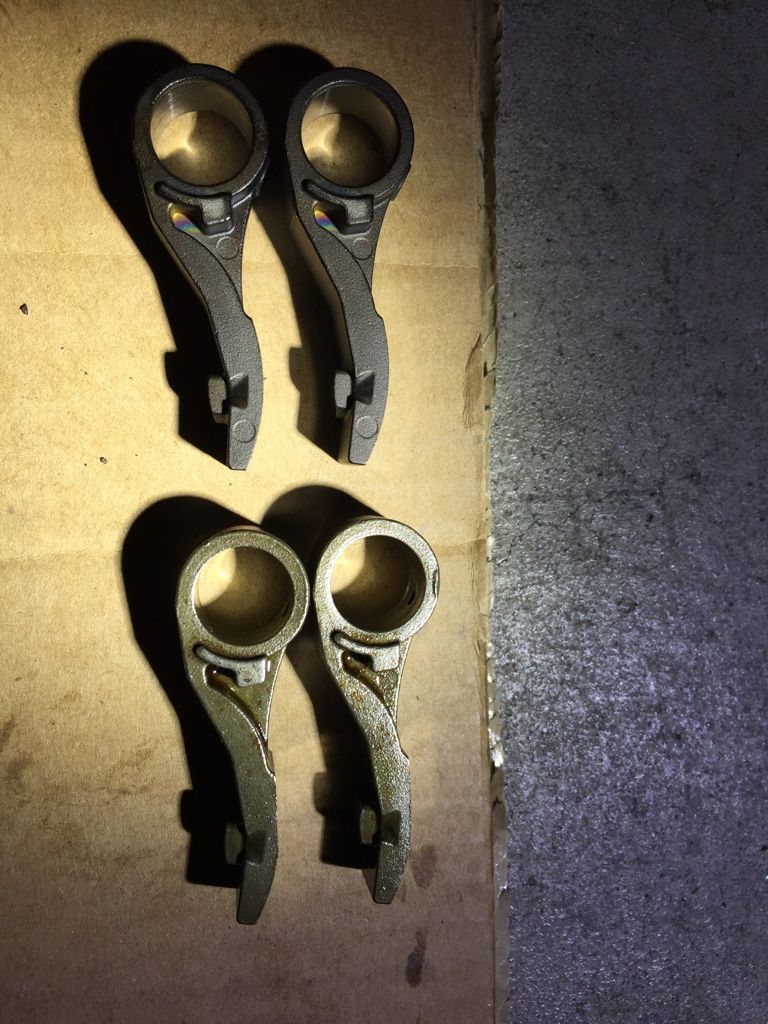
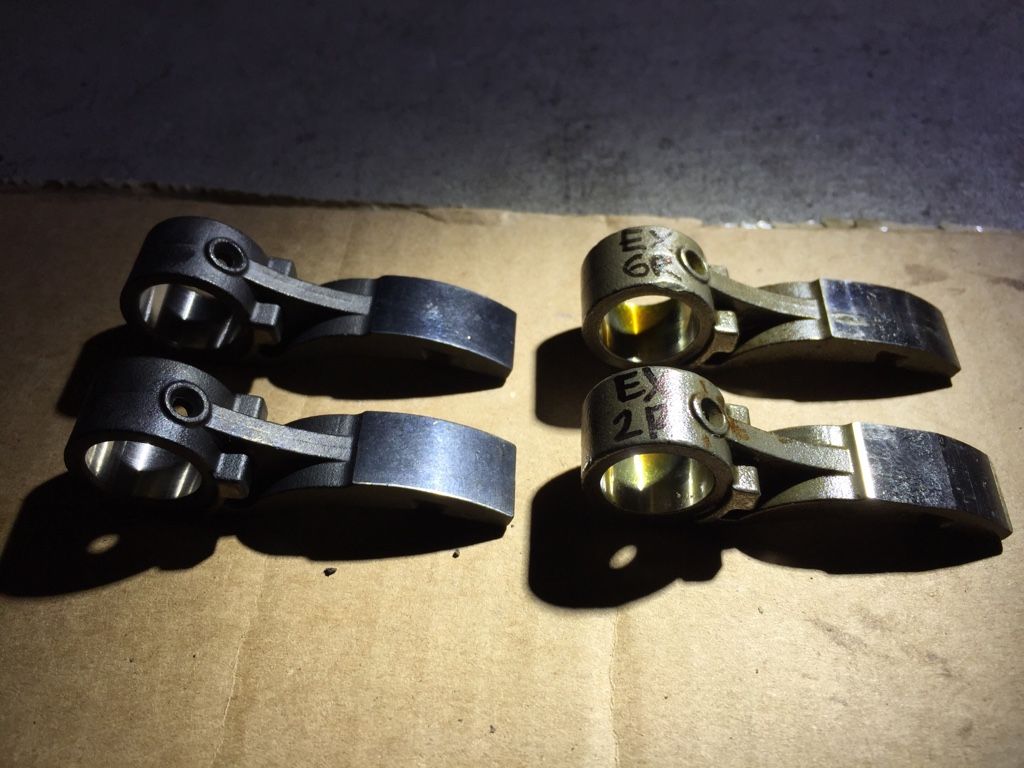
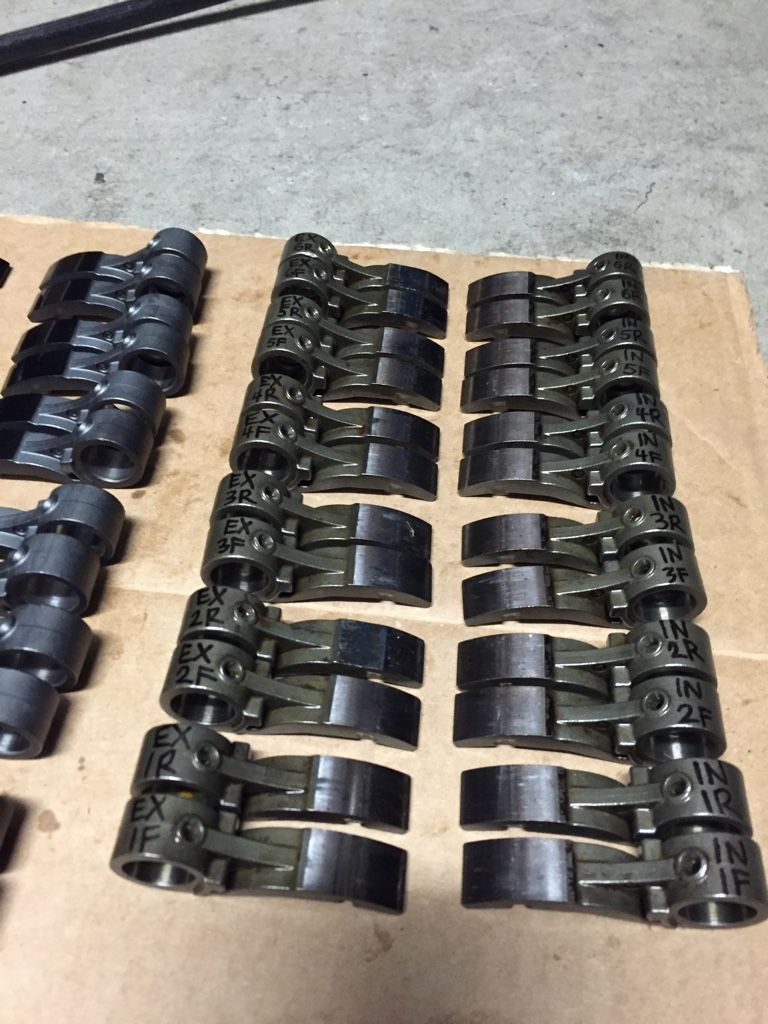
These pics are pulled from that thread… very disturbing…

folowers%20flat.jpg


followrers2.jpg


folowers%203.jpg


All 3 pictures reproduced here without permission nor consent, for thread completeness.

EX2r and EX6r… holy crap!!! Langy was quoted as saying that from going through its protective coating to being flat like these would take only a mater of hours, the noise going from slight to loud.

wow, just very worrying indeed.. i wonder how my followers will look at 200K plus kilometres, with a bunch of track days thrown in.

Now about the Head gasket, is this something I should be looking at?? and if so, why?

Edit: I just got off the blower with my Indi, and the head gasket is a big job.. (he says) its not just the gasket, but if going that way will need, Head skimming, and valve grinding, but as the donk is already half apart, will save 1/2 the time on labour..

whats the consensus on this? Is a leak down test in order first? I have over 200k kilometres on my S54
 
Vanne said:
Late to the party, i know, but having just read this and also the M3 link that Byron posted up, I am pretty darn glad i got new shrick dlc followers with my soon to be installed shrick cams.

These pics are pulled from that thread… very disturbing…

folowers%20flat.jpg


followrers2.jpg


folowers%203.jpg


All 3 pictures reproduced here without permission nor consent, for thread completeness.

EX2r and EX6r… holy crap!!! Langy was quoted as saying that from going through its protective coating to being flat like these would take only a mater of hours, the noise going from slight to loud.

wow, just very worrying indeed.. i wonder how my followers will look at 200K plus kilometres, with a bunch of track days thrown in.

Now about the Head gasket, is this something I should be looking at?? and if so, why?

Edit: I just got off the blower with my Indi, and the head gasket is a big job.. (he says) its not just the gasket, but if going that way will need, Head skimming, and valve grinding, but as the donk is already half apart, will save 1/2 the time on labour..

whats the consensus on this? Is a leak down test in order first? I have over 200k kilometres on my S54

Hi, I don't know why they would be skimming the head & lapping valves with no evidence these items need attention?
I would want proof of problems first, if its not broken don't fix it!
Rob
 
I don't think lifter wear is proportional to milegae, there are cars with well over 100k on the clock with lifters shiney like new.

I've been reading around the forums and it seems even the engine specialists can't give a direct explanation but the consensus seems to be oil starvation. Although the S54 has excellent oil flow characteristics, if you're pulling some hard G forces and the oil is near the bottom of the dipstick there could be one area which gets starved of supply for just a second and that's enough to wear through the diamond coating on the lifter. This could be total bollocks but I'll always be keeping my oil topped up to the max marker on the dipstick from now on just incase.
 
tomTVR said:
This could be total bollocks but I'll always be keeping my oil topped up to the max marker on the dipstick from now on just incase.
How much tolerance is there between top mark of the dipstick and the level at which damage from overfilling occurs?
 
Back
Top Bottom