Unsprung mass - how much difference?

mjennings23

Senior member
 North West
Simple question really, I'm changing my wheels soon, moving from cast OEM alloys to flow formed aftermarket wheels, saving around 2-3kg per corner in weight (rears have a greater reduction due to the ratio of barrel to face)

The question is, how likely is this to actually be noticeable in daily driving. I imagine the car may be slightly more eager to accelerate due to less rotational mass on the axles, but what sort of difference are we talking?

For reference, the current wheels are around 11.5-12.5kg each, new ones 9-9.5kg
 
Hi,

Maybe I can help: I test drove two different Z4M Coupes almost back to back, one had OEM CSL wheels and one had CSL replicas by CM. I for one recall feeling a difference in a series of corners with definitely more eagerness to turn in in favour of the OEM CSL.
and I discovered only afterwards that the wheels on second car I drove were replicas...

Of course I did not measure acceleration times but the sensations were in favour of the first car with genuine CSL (I am assuming these are lighter than the replicas, if it is the other way round then...)

Hope this helps,
A
 
Acceleration but also changing direction too. This is more noticeable on a motorbike, but not sure how much this will be on a car, but any weight reduction helps.
 
Attilio said:
Hi,

Maybe I can help: I test drove two different Z4M Coupes almost back to back, one had OEM CSL wheels and one had CSL replicas by CM. I for one recall feeling a difference in a series of corners with definitely more eagerness to turn in in favour of the OEM CSL.
and I discovered only afterwards that the wheels on second car I drove were replicas...

Of course I did not measure acceleration times but the sensations were in favour of the first car with genuine CSL (I am assuming these are lighter than the replicas, if it is the other way round then...)

Hope this helps,
A

Unless you are a professional race driver in your spare time I highly doubt you could tell the difference between the reps and oem wheels. IIRC they have been weighed by people on the M3 forum and the differences are minimal, circa 1kg per wheel at most. The differences you felt were almost certainly suspension, tyres and bushes related. All IMO of course.
 
Z4 Gaz said:
Attilio said:
Hi,

Maybe I can help: I test drove two different Z4M Coupes almost back to back, one had OEM CSL wheels and one had CSL replicas by CM. I for one recall feeling a difference in a series of corners with definitely more eagerness to turn in in favour of the OEM CSL.
and I discovered only afterwards that the wheels on second car I drove were replicas...

Of course I did not measure acceleration times but the sensations were in favour of the first car with genuine CSL (I am assuming these are lighter than the replicas, if it is the other way round then...)

Hope this helps,
A

Unless you are a professional race driver in your spare time I highly doubt you could tell the difference between the reps and oem wheels. IIRC they have been weighed by people on the M3 forum and the differences are minimal, circa 1kg per wheel at most. The differences you felt were almost certainly suspension, tyres and bushes related. All IMO of course.

I'd expect CSL wheels would be lighter, owing to them being flow formed wheels as opposed to reps undoubtedly being cast.

From what I can tell, mostly from using tirerack.com and their weighing of everything, my current setup is around 22kg per corner (alloy and tyre) and the new one will be 19kg.

I've done some reading and unsprung mass is worth far more in reduction terms than sprung mass, but the wheel rotational mass is another factor again that increases the feeling of weight loss.

Of course there's no real science shown, but the concensus seems to be somewhere between 6x and 10x the effect of reducing mass in the body of the car.

Well, I guess I'll have an answer for you all in a few weeks anyway :rofl:
 
Z4 Gaz said:
Attilio said:
Hi,

Maybe I can help: I test drove two different Z4M Coupes almost back to back, one had OEM CSL wheels and one had CSL replicas by CM. I for one recall feeling a difference in a series of corners with definitely more eagerness to turn in in favour of the OEM CSL.
and I discovered only afterwards that the wheels on second car I drove were replicas...

Of course I did not measure acceleration times but the sensations were in favour of the first car with genuine CSL (I am assuming these are lighter than the replicas, if it is the other way round then...)

Hope this helps,
A

Unless you are a professional race driver in your spare time I highly doubt you could tell the difference between the reps and oem wheels. IIRC they have been weighed by people on the M3 forum and the differences are minimal, circa 1kg per wheel at most. The differences you felt were almost certainly suspension, tyres and bushes related. All IMO of course.

yes, good point: different tyres, alignment and different levels of wear surely exert an influence... still, perception is reality as they say :)

A
 
This was more a curiousity than a "will I gain performance" thing anyway, as the wheels look bloody gorgeous and they're made by one of the world's leading manufacturers, so I have no doubt as to their durability.

On a side note my reading also implies, quite logically, that reducing the wheel mass also helps the suspension work better. Makes sense, as a heavy wheel surely takes longer to dampen an impact on than a lighter wheel, therefore allowing the lighter wheel to be back in full contact with the surface faster.
 
Attilio said:
Hi,

Maybe I can help: I test drove two different Z4M Coupes almost back to back, one had OEM CSL wheels and one had CSL replicas by CM. I for one recall feeling a difference in a series of corners with definitely more eagerness to turn in in favour of the OEM CSL.
and I discovered only afterwards that the wheels on second car I drove were replicas...

Of course I did not measure acceleration times but the sensations were in favour of the first car with genuine CSL (I am assuming these are lighter than the replicas, if it is the other way round then...)

Hope this helps,
A

I had both gen CSLs & CM reps on previous Z4M
In reality barring the small embossed "BMW" around the hub on genuine there is negligible difference in looks , weight or feel on or off the car . Hence why I sold the genuine ones , unless you really have to have the real deal I struggled to see any benefit from 3 X the cost .

As for the Op question ?
Style 32 staggered 18s are about as light a OE Bmw wheel you can find .
I tried them , I'd be lying if i said I noticed the difference from stock 18s on Si Z4s .
The ZMR I've recently bought has lightweight flowformed alloys around 9kg a corner , be interesting to see if I notice once I collect the car :driving:
 
dhobbs said:
Acceleration but also changing direction too. This is more noticeable on a motorbike, but not sure how much this will be on a car, but any weight reduction helps.

makes a lot of difference on a bike, and you can feel the difference straight away.
I fitted bst carbon wheels to my track 1098s a few years back, and gave a big difference in handling, turn in , changing direction.
not sure you would feel it on a car unless your tracking it, and your pushing it hard.
 
Barely anything. Unless you are dropping like 100kgs in weight you won't notice it and figures aren't changing. Anything else is just placebo.

Dropping sprung weight is far better for improving performance and handling.
Light weight wheels are insignificant unless you are a lap chased and dropping to true light magnesium etc wheels.

The difference in weight here is <1%. Imagine the difference gained if you had that in power or fuel economy.
 
Monkeydonkeyratmagic said:
Dropping sprung weight is far better for improving performance and handling.

You've got that the wrong way round.

From any on the number of things that pop up on google if you don't believe me...
"Racing teams thus reduce unsprung weight by, for example, using lightweight but delicate magnesium wheels, and engineers try to design suspensions with as little unsprung weight as possible. That’s why a few cars such as the 1961–75 Jaguar E type have employed brakes mounted not to the wheel hub, but to the inboard end of the half shaft: it’s all an effort to reduce unsprung weight.

Note that unsprung weight or mass is sometimes confused with rotating mass because some parts (tires, wheels, most brake discs) fall into both categories and because racers want to reduce them both. But they’re not the same thing. Rotating mass is what it sounds like, anything that has to rotate when the car goes forward, so for example the steering knuckle is unsprung but doesn’t rotate, while the half shaft is rotating but only partly unsprung. Lower unsprung weight improves handling and sometimes traction, while lowering rotating weight improves acceleration."
 
mjennings23 said:
Simple question really, I'm changing my wheels soon, moving from cast OEM alloys to flow formed aftermarket wheels, saving around 2-3kg per corner in weight (rears have a greater reduction due to the ratio of barrel to face)

Hi OP,
what wheels are you going for? Thanks
A
 
Attilio said:
mjennings23 said:
Simple question really, I'm changing my wheels soon, moving from cast OEM alloys to flow formed aftermarket wheels, saving around 2-3kg per corner in weight (rears have a greater reduction due to the ratio of barrel to face)

Hi OP,
what wheels are you going for? Thanks
A

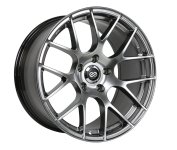
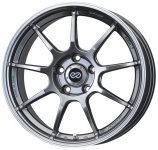
I'm torn between 2 sets of Enkei wheels. Both pressure cast faces with flow formed rims so a good bit lighter than stock rims as described previously.
 
Attilio said:
mjennings23 said:
Simple question really, I'm changing my wheels soon, moving from cast OEM alloys to flow formed aftermarket wheels, saving around 2-3kg per corner in weight (rears have a greater reduction due to the ratio of barrel to face)

Hi OP,
what wheels are you going for? Thanks
A

Options!

raijin-hyper1 (1).jpg
RSM9_Platinum.jpg
 
TomK said:
Monkeydonkeyratmagic said:
Dropping sprung weight is far better for improving performance and handling.

You've got that the wrong way round.

From any on the number of things that pop up on google if you don't believe me...
"Racing teams thus reduce unsprung weight by, for example, using lightweight but delicate magnesium wheels, and engineers try to design suspensions with as little unsprung weight as possible. That’s why a few cars such as the 1961–75 Jaguar E type have employed brakes mounted not to the wheel hub, but to the inboard end of the half shaft: it’s all an effort to reduce unsprung weight.

Note that unsprung weight or mass is sometimes confused with rotating mass because some parts (tires, wheels, most brake discs) fall into both categories and because racers want to reduce them both. But they’re not the same thing. Rotating mass is what it sounds like, anything that has to rotate when the car goes forward, so for example the steering knuckle is unsprung but doesn’t rotate, while the half shaft is rotating but only partly unsprung. Lower unsprung weight improves handling and sometimes traction, while lowering rotating weight improves acceleration."

Be realistic and relative to the question.

What difference is a minor difference in weight going to have a 10+ year old Z4? f**k all is the answer.

Want a realistic option of improving handling, wrap wheels in some T888s. Stick to the road like a limpet.

Increase in acceleration? If it makes ANY gains over several runs £/s gained will be through the roof in a negative way.

There isn't much you can actually drop off this motor to make any substantial saving or gains. If you strip the seats for light buckets, change the dmf for a single mass lightweight job, lop the cat and back box off, you may then notice something.

Dropping a set of wheels on what is a relatively tanky and flimsy roadster isn't doing anything.

And all of these expected gains the internet raves about is assuming that all bushes, clutches, diffs and boxes etc etc are all mint.

Not trying to be rude or start an internet war but some of the stuff in this thread is offering some serious disappointment to the OP.
 
You can calculate how much virtual extra torque your engine's getting by the lighter wheels pretty easy.
(or better said, you can calculate how much torque it takes to get that extra weight spinning in the time it talkes that your car accelerates to say 60mph).
How much easier it turns in directiion, or how much better the road contact is improving is difficult to calculate
 
Monkeydonkeyratmagic said:
TomK said:
Monkeydonkeyratmagic said:
Dropping sprung weight is far better for improving performance and handling.

You've got that the wrong way round.

From any on the number of things that pop up on google if you don't believe me...
"Racing teams thus reduce unsprung weight by, for example, using lightweight but delicate magnesium wheels, and engineers try to design suspensions with as little unsprung weight as possible. That’s why a few cars such as the 1961–75 Jaguar E type have employed brakes mounted not to the wheel hub, but to the inboard end of the half shaft: it’s all an effort to reduce unsprung weight.

Note that unsprung weight or mass is sometimes confused with rotating mass because some parts (tires, wheels, most brake discs) fall into both categories and because racers want to reduce them both. But they’re not the same thing. Rotating mass is what it sounds like, anything that has to rotate when the car goes forward, so for example the steering knuckle is unsprung but doesn’t rotate, while the half shaft is rotating but only partly unsprung. Lower unsprung weight improves handling and sometimes traction, while lowering rotating weight improves acceleration."

Be realistic and relative to the question.

What difference is a minor difference in weight going to have a 10+ year old Z4? f**k all is the answer.

Want a realistic option of improving handling, wrap wheels in some T888s. Stick to the road like a limpet.

Increase in acceleration? If it makes ANY gains over several runs £/s gained will be through the roof in a negative way.

There isn't much you can actually drop off this motor to make any substantial saving or gains. If you strip the seats for light buckets, change the dmf for a single mass lightweight job, lop the cat and back box off, you may then notice something.

Dropping a set of wheels on what is a relatively tanky and flimsy roadster isn't doing anything.

And all of these expected gains the internet raves about is assuming that all bushes, clutches, diffs and boxes etc etc are all mint.

Not trying to be rude or start an internet war but some of the stuff in this thread is offering some serious disappointment to the OP.

You may well be right about the effect minimal weight loss has on overall performance, I'm not disagreeing with you. However, to say
that losing sprung weight over unsprung is somehow better for handling and performance is utter nonsense.
Check your facts before making statements and then having a go at someone about a load of stuff they didn't say.
 
Back
Top Bottom