A
Anonymous
Guest
As readers may know, direct injection engines (like the N20, N54 and successors like B48/B58 ) inject fuel at high pressure direct into the combustion chamber. Just like modern diesels have been doing for years.
One down side is that compared to old carvburettor'd engines and early fuel injected engines, no clean, cool fuel gets washed over the inlet valves.
Allied to the pollution control equipment which routes crankcase gases (which are a mixture of oil mist and blow by gases) back through the inlet ports to burn these products off and a phenomenon of inlet coking takes place.
It can get so bad that the engine literally is deprived of air to run, poor starting, poor idle and down on power are the usual symptons with mysterious faults that appear like coil/plug issues.
Anyway..as a service to mankind I decided to have my inlets de-coked.
There are 3 main ways of doing this..
First there was crushed walnut shells blasted into the inlet port (valve closed please) and then the crap (walnet shell debris and coke being literally hoover'd out)
Then two new options..one essentially injecting a mixture of hydrogen and oxygen gases into the inlet and burning of the coke in a localised bonfire..
Finally, an updated version of the walnut shells with a type of beads, made of a proprietory compound injected under pressure and a powerful solvent added at the end to dissolve any bead residue and left over tar like deposits.
I booked myself into The Performance Centre in Sunderland for the latter treatment and a dyno run to see the before / after effect.
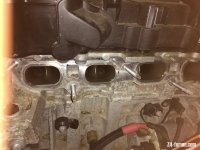
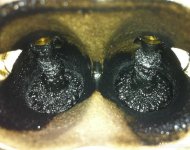
On arrival, one chap Mr Quiet stripped the inlet manifold off, then called me back, basically hardly any carbon for 47,000 miles..suggeested spending £360 a waste of time.
So after a long debate about the subject, why some engines do and some engines don't coke up, we agreed effectively a wire brush dentist style clean up only and pop on the dyno..not that Mr Taciturn expected any changes.
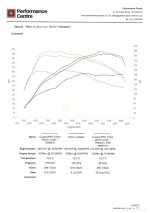
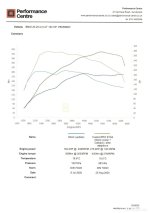
So onto the dyno we go and we get about 10 BHP and 27NM more torque..
Mr Taciturn does about 8 runs to try and figure what gives..
Where is the power coming from..mainly more boost around 2PSI in the low to mid range and slighly more stable ignition timing.
Mr Taciturn explains that the ECU adapts over time..seems like it needs a fair amount of time/mileage..in my case around 500 miles ish.
He explains that mixing lower grade fuels with higher grades causes issues so once you've started stick to the higher grades (does he work for Shell)..anyway enjoy the pictures and graphs.
One down side is that compared to old carvburettor'd engines and early fuel injected engines, no clean, cool fuel gets washed over the inlet valves.
Allied to the pollution control equipment which routes crankcase gases (which are a mixture of oil mist and blow by gases) back through the inlet ports to burn these products off and a phenomenon of inlet coking takes place.
It can get so bad that the engine literally is deprived of air to run, poor starting, poor idle and down on power are the usual symptons with mysterious faults that appear like coil/plug issues.
Anyway..as a service to mankind I decided to have my inlets de-coked.
There are 3 main ways of doing this..
First there was crushed walnut shells blasted into the inlet port (valve closed please) and then the crap (walnet shell debris and coke being literally hoover'd out)
Then two new options..one essentially injecting a mixture of hydrogen and oxygen gases into the inlet and burning of the coke in a localised bonfire..
Finally, an updated version of the walnut shells with a type of beads, made of a proprietory compound injected under pressure and a powerful solvent added at the end to dissolve any bead residue and left over tar like deposits.
I booked myself into The Performance Centre in Sunderland for the latter treatment and a dyno run to see the before / after effect.
On arrival, one chap Mr Quiet stripped the inlet manifold off, then called me back, basically hardly any carbon for 47,000 miles..suggeested spending £360 a waste of time.
So after a long debate about the subject, why some engines do and some engines don't coke up, we agreed effectively a wire brush dentist style clean up only and pop on the dyno..not that Mr Taciturn expected any changes.
So onto the dyno we go and we get about 10 BHP and 27NM more torque..
Mr Taciturn does about 8 runs to try and figure what gives..
Where is the power coming from..mainly more boost around 2PSI in the low to mid range and slighly more stable ignition timing.
Mr Taciturn explains that the ECU adapts over time..seems like it needs a fair amount of time/mileage..in my case around 500 miles ish.
He explains that mixing lower grade fuels with higher grades causes issues so once you've started stick to the higher grades (does he work for Shell)..anyway enjoy the pictures and graphs.

 Attleborough, Norfolk