

 Scottish Borders
We had a recent major power outage courtesy of Storm Isha with 20 hours or so no mains power.
Pressed into service a mixture of car batteries with inverters and my back up generators.
Embarrassingly my main back up battery a big 110 ah leisure battery was flat!
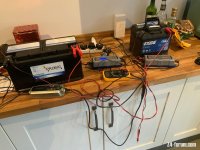
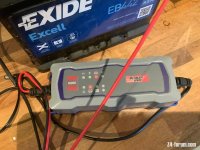
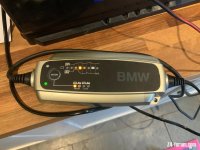
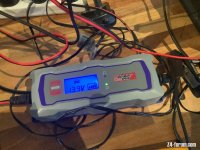
After mains power was restored I started charging the batteries up with my two Lidl chargers and my BMW aka CTEK charger.
What was interesting was that both the Lidl chargers considered both wet batteries charged quite early on..whereas..the CTEK would huff and puff for a lot longer on each battery.
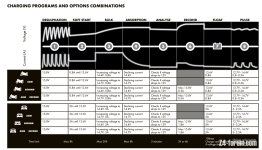
Looked up and essentially most chargers are 3/4 stages..
First step: BULK phase
In the bulk phase, the battery charger delivers its maximum current, e.g. 50 amps for a ChargeMaster 12/50 and battery voltage increases. The duration of this phase depends on the battery capacity, charger capacity and any consumers connected to the battery during charging. The bigger the battery, the longer this step takes; the larger the charger, the shorter the stage. If consumers such as a refrigerator is connected, they will also need to be powered by the charger, reducing the charge current going into the batteries and increasing the time necessary for charging.
Second step: ABSORPTION phase
The second step, the absorption phase, begins once the battery has reached its maximum voltage. At this point the battery is around 80 % full, and the charge current begins to slowly decrease. At 25 °C, the maximum voltage is 14.25 volts for a 12 V battery and 28.5 volts for a 24 V one. In this stage the battery is charged to the full 100 %, which takes approximately three to four hours, depending on the battery type, the battery charger and the charge amount.
Third step: FLOAT phase
Once the battery is fully charged at the end of the absorption phase, the float phase begins. The Mastervolt battery charger switches over to a maintenance voltage so that the battery remains fully charged and in optimum condition. Any existing consumer loads are also powered. The charger remains in the float phase until the battery voltage falls due to a major load, or the battery charger is unplugged because the power connection was removed.
Then there's some optional stuff about either doing a burst of absorption charging and /or desulphonation mode to get rid of sulphates on plates.
The CTEKs have many stages..how much of its mumbo jumbo I'm not sure..
Does it matter?
For recovering and using some big leisure batteries probably so and cars with early electrics..if you have an E89/G29 probably not..its going to be a new battery and a 'simple' charger will suffice..
The reason why my big battery was flat was that I kept in on trickle charge with a Lidl charger and it had tripped offline and then was slowly draining the battery..one good reason for a CTEK..albeit 5 times more expensive..
Sorry to waste everyone's time..
Pressed into service a mixture of car batteries with inverters and my back up generators.
Embarrassingly my main back up battery a big 110 ah leisure battery was flat!
After mains power was restored I started charging the batteries up with my two Lidl chargers and my BMW aka CTEK charger.
What was interesting was that both the Lidl chargers considered both wet batteries charged quite early on..whereas..the CTEK would huff and puff for a lot longer on each battery.
Looked up and essentially most chargers are 3/4 stages..
First step: BULK phase
In the bulk phase, the battery charger delivers its maximum current, e.g. 50 amps for a ChargeMaster 12/50 and battery voltage increases. The duration of this phase depends on the battery capacity, charger capacity and any consumers connected to the battery during charging. The bigger the battery, the longer this step takes; the larger the charger, the shorter the stage. If consumers such as a refrigerator is connected, they will also need to be powered by the charger, reducing the charge current going into the batteries and increasing the time necessary for charging.
Second step: ABSORPTION phase
The second step, the absorption phase, begins once the battery has reached its maximum voltage. At this point the battery is around 80 % full, and the charge current begins to slowly decrease. At 25 °C, the maximum voltage is 14.25 volts for a 12 V battery and 28.5 volts for a 24 V one. In this stage the battery is charged to the full 100 %, which takes approximately three to four hours, depending on the battery type, the battery charger and the charge amount.
Third step: FLOAT phase
Once the battery is fully charged at the end of the absorption phase, the float phase begins. The Mastervolt battery charger switches over to a maintenance voltage so that the battery remains fully charged and in optimum condition. Any existing consumer loads are also powered. The charger remains in the float phase until the battery voltage falls due to a major load, or the battery charger is unplugged because the power connection was removed.
Then there's some optional stuff about either doing a burst of absorption charging and /or desulphonation mode to get rid of sulphates on plates.
The CTEKs have many stages..how much of its mumbo jumbo I'm not sure..
Does it matter?
For recovering and using some big leisure batteries probably so and cars with early electrics..if you have an E89/G29 probably not..its going to be a new battery and a 'simple' charger will suffice..
The reason why my big battery was flat was that I kept in on trickle charge with a Lidl charger and it had tripped offline and then was slowly draining the battery..one good reason for a CTEK..albeit 5 times more expensive..
Sorry to waste everyone's time..


 At the summit of the picturesque fens
