
Shortly after buying my Z4MC, I modded the suspension with AC Schnitzer Racing adjustable suspension, a StrongStrut strutbrace, H&R M3 CSL ARBs, Turner Motorsport Rear Trailing Arm Bush Limiter Kit and 10mm wheel spacers all round. On top of that I’ve adjusted the geometry to my preference and the handling and ride has improved considerably. However, I want to try to improve the handling some more with some aerodynamic tweaks. In order to maintain practicality of the car on public roads, I don’t want to fit a front splitter of any type that I’ve seen so far because they all reduce ground clearance. Likewise, I don’t want to fit a big wing on the rear because I think they only look right on a race car. Consequently, I’ve been exploring the possibility of fitting various parts beneath the car, which might improve the speed of the airflow under the car, and which might produce low pressure beneath the car in order to counteract the inherent tendency to the car going “light” at higher speeds due to aerodynamic lift. I take my car to The Ring so it will be doing over 150mph and I want it to feel “planted” at all speeds so anything I fit must be safe.
The underside of the Z4MC is already reasonably tidy when compared to many other cars and there are various covers fitted on the underside, which make the under-surface reasonably flat. However, there are still large voids and objects (exhaust pipes and suspension parts), which will cause air turbulence and prevent the smooth flow of air across the full width and length of the car. So, I’ve looked at the flow of air across the full width of the car, progressively moving towards the rear, viewing potential ways of reducing turbulence beneath the car and promoting high airflow/ low pressure.
The first place to start is the rake angle of the car, which can create a “Venturi” and an area of low pressure if there is a positive angle of the floor pan to the road.
Next, the OEM front bumper has “fangs” which act as a splitter (although very small) and there are the “brake ducts” above them, which IMO, are partly there to act as a vessel to increase the air pressure at the front of the car, which makes the fangs more effective as splitters. In the centre of the front bumper there is a rubber strip, which acts as an airdam that limits the amount of air getting beneath the car.
Immediately behind the front bumper on the underside of the car is a plastic tray which covers the engine and this is very well designed an assists in engine cooling as well as directing the airflow to the front wheels.
Behind this is the metal reinforcement plate for the front axle/suspension. Since this part has a dome in the centre, I thought that fitting two longitudinal strakes onto this part (using existing holes in the plate) would help to force the air to pass directly over the dome rather than possibly take a more circuitous passage around it.
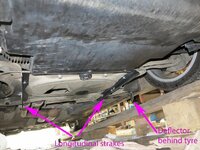
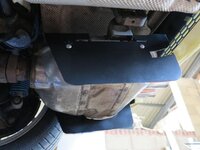
From studying the published literature relating to airflow in the wheelhouse, I’ve learned that the rotating wheels will produce a pair of “jetting vortices” at road level behind the wheel, which are visible as the spray behind the tyre when the road is wet, and I think that by placing a deflector at 45 degrees to the tyre on the inside beneath the car might deflect these vortices outwards, and thus preventing air entering under the cills in the same way as side skirts work. I’ve made these from aluminium and rubber so that they will not break when crossing “sleeping policemen”, etc. I have used existing panel fastenings to attach them.
In front of the rear wheels, the OEM wheelhouse cover already has a deflector, which speeds up the air in front of the tyre, which helps to clear standing water. I have attached longitudinal strake to the inside of the wheel which starts a couple of inches in front of the OEM wheelhouse cover. The intention of this part is to act like a side skirt to prevent air ingress under the car in front of the rear axle and also to promote air already travelling under the car to follow a straight path under the car, rather than to become turbulent on the inside of the wheelhouse. These parts are made from aluminium and rubber and are attached to the diagonal rear bracing.
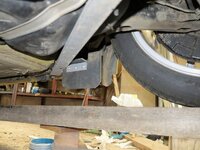
Further back I’ve also fitted a couple of small strakes which are again fitted to the diagonal bracing just in front, and directly inline, of the start of the OEM plastic sloping diffuser tray that fits between the silencers. The purpose of these strakes is to assist the airflow directly into the diffuser.
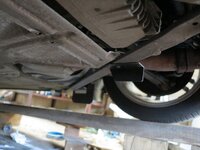
Finally, I have made 4 vertical strakes, made from aluminium sheet, which extend longitudinally and which are attached to the silencers in an attempt to make a more effective diffuser arrangement at the rear of the car.
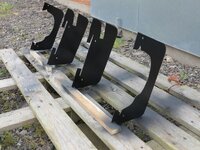
In section, the OEM silencers are rounded structures which must inherently generate a “Coanda effect" as air passes over them: this must create a zone of low pressure beneath them which should counteract lift at the rear provided that the airflow passes beneath them rather than around them. Therefore, the vertical strakes will make the air flow over the silencers rather than around them.
Likewise, the air flowing between the silencers will improve the effectiveness of the OEM diffuser part. Further the outer strakes will prevent air from the rear wheelhouses causing turbulence in the rear diffuser section. As such, the jetting vortices produced by the rear wheels should exit in a straight line behind the car which should help pull the air through the underside of the car.
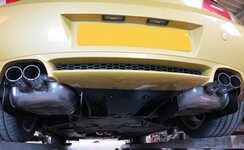
Here are a few shots of what all this looks like on the car.
I've positioned the car so that I could take an "elevation" side view to show the parts. Normal viewing from the side doesn't really show these parts.
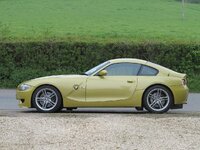
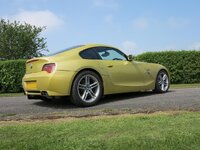
I’ve installed each of these items step by step and test driven them progressively as I’ve developed the underside of the car and the handling of the car has shown no detrimental effects; the car has become extremely precise. With all these parts in place my initial impression within the first few minutes when I drove the car with all these parts was that the car turned much quicker than before although the car will naturally drive straight ahead with no steering input. After a full test drive, the car feels much "flatter" around corners where I can feel the weight transfer as a sideways shift rather than as a lateral bodyroll and the car feels very stable at speed even on bumpy A&B roads. The suspension doesn't seem to move too much either, which suggests to me that the ARBs are working less if there's less aerodynamic lift. There is virtually no lifting on hard acceleration or pitching on hard braking despite the suspension presently set on my “fast road” settings, which are actually quite soft on the range of adjustment. All in all, I'm very pleased with the work so far, and it has cost me nothing other than my time to make all the bits and pieces. I've used as many of the cars existing points of attachments as I could, but I've had to weld small brackets onto the silencers to attach the rear diffuser strakes: this isn't a problem because my original OEM silencers are not used, instead I've used my already modded silencers. All the parts can easily be removed and the car returned to OEM.
I’ve previously done similar mods to my Z3MC, in which I’ve done many laps at The Ring, so I’ve not been entirely walking in the dark with this project.
The underside of the Z4MC is already reasonably tidy when compared to many other cars and there are various covers fitted on the underside, which make the under-surface reasonably flat. However, there are still large voids and objects (exhaust pipes and suspension parts), which will cause air turbulence and prevent the smooth flow of air across the full width and length of the car. So, I’ve looked at the flow of air across the full width of the car, progressively moving towards the rear, viewing potential ways of reducing turbulence beneath the car and promoting high airflow/ low pressure.
The first place to start is the rake angle of the car, which can create a “Venturi” and an area of low pressure if there is a positive angle of the floor pan to the road.
Next, the OEM front bumper has “fangs” which act as a splitter (although very small) and there are the “brake ducts” above them, which IMO, are partly there to act as a vessel to increase the air pressure at the front of the car, which makes the fangs more effective as splitters. In the centre of the front bumper there is a rubber strip, which acts as an airdam that limits the amount of air getting beneath the car.
Immediately behind the front bumper on the underside of the car is a plastic tray which covers the engine and this is very well designed an assists in engine cooling as well as directing the airflow to the front wheels.
Behind this is the metal reinforcement plate for the front axle/suspension. Since this part has a dome in the centre, I thought that fitting two longitudinal strakes onto this part (using existing holes in the plate) would help to force the air to pass directly over the dome rather than possibly take a more circuitous passage around it.
From studying the published literature relating to airflow in the wheelhouse, I’ve learned that the rotating wheels will produce a pair of “jetting vortices” at road level behind the wheel, which are visible as the spray behind the tyre when the road is wet, and I think that by placing a deflector at 45 degrees to the tyre on the inside beneath the car might deflect these vortices outwards, and thus preventing air entering under the cills in the same way as side skirts work. I’ve made these from aluminium and rubber so that they will not break when crossing “sleeping policemen”, etc. I have used existing panel fastenings to attach them.
In front of the rear wheels, the OEM wheelhouse cover already has a deflector, which speeds up the air in front of the tyre, which helps to clear standing water. I have attached longitudinal strake to the inside of the wheel which starts a couple of inches in front of the OEM wheelhouse cover. The intention of this part is to act like a side skirt to prevent air ingress under the car in front of the rear axle and also to promote air already travelling under the car to follow a straight path under the car, rather than to become turbulent on the inside of the wheelhouse. These parts are made from aluminium and rubber and are attached to the diagonal rear bracing.
Further back I’ve also fitted a couple of small strakes which are again fitted to the diagonal bracing just in front, and directly inline, of the start of the OEM plastic sloping diffuser tray that fits between the silencers. The purpose of these strakes is to assist the airflow directly into the diffuser.
Finally, I have made 4 vertical strakes, made from aluminium sheet, which extend longitudinally and which are attached to the silencers in an attempt to make a more effective diffuser arrangement at the rear of the car.
In section, the OEM silencers are rounded structures which must inherently generate a “Coanda effect" as air passes over them: this must create a zone of low pressure beneath them which should counteract lift at the rear provided that the airflow passes beneath them rather than around them. Therefore, the vertical strakes will make the air flow over the silencers rather than around them.
Likewise, the air flowing between the silencers will improve the effectiveness of the OEM diffuser part. Further the outer strakes will prevent air from the rear wheelhouses causing turbulence in the rear diffuser section. As such, the jetting vortices produced by the rear wheels should exit in a straight line behind the car which should help pull the air through the underside of the car.
Here are a few shots of what all this looks like on the car.
I've positioned the car so that I could take an "elevation" side view to show the parts. Normal viewing from the side doesn't really show these parts.
I’ve installed each of these items step by step and test driven them progressively as I’ve developed the underside of the car and the handling of the car has shown no detrimental effects; the car has become extremely precise. With all these parts in place my initial impression within the first few minutes when I drove the car with all these parts was that the car turned much quicker than before although the car will naturally drive straight ahead with no steering input. After a full test drive, the car feels much "flatter" around corners where I can feel the weight transfer as a sideways shift rather than as a lateral bodyroll and the car feels very stable at speed even on bumpy A&B roads. The suspension doesn't seem to move too much either, which suggests to me that the ARBs are working less if there's less aerodynamic lift. There is virtually no lifting on hard acceleration or pitching on hard braking despite the suspension presently set on my “fast road” settings, which are actually quite soft on the range of adjustment. All in all, I'm very pleased with the work so far, and it has cost me nothing other than my time to make all the bits and pieces. I've used as many of the cars existing points of attachments as I could, but I've had to weld small brackets onto the silencers to attach the rear diffuser strakes: this isn't a problem because my original OEM silencers are not used, instead I've used my already modded silencers. All the parts can easily be removed and the car returned to OEM.
I’ve previously done similar mods to my Z3MC, in which I’ve done many laps at The Ring, so I’ve not been entirely walking in the dark with this project.


