Tyre Advice

Gwest44

Senior member
 Sheffield
Just looking for some guidance regarding the tyres on my sDrive 23i E89 that I have recently acquired which has the style 296 alloys.
The front tyres have recently been replaced with Avon ZV7 and have over 7mm of tread.
However the rears are Pirelli PZero with only just over 3mm of tread so will need changing soon.
The question I have relates to size - the current rears are 255/35R19 but when I search online the suggested size is 255/30R19.
So if I stick with the current size I can get the matching Avon ZV7's for £124 each or the same Pirelli's for £142.
If I go with the suggested size of 255/30R19 I can't get the Avon's and the Pirelli PZero option increases in price to £206.
I have had the wheels off and can confirm there is no rubbing so I'm assuming the 30 profile tyres are only required if you are running the MSport suspension.
Would welcome any views based on the experience of others.
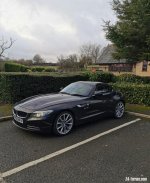
 

Attachments

  • IMG_20210119_200306.jpg
    IMG_20210119_200306.jpg
    266.1 KB · Views: 450
What sizes have you got on the front? Quite a big difference between 255/30 and 255/35, would want to make sure they pair well with the fronts.
 
brillomaster said:
What sizes have you got on the front? Quite a big difference between 255/30 and 255/35, would want to make sure they pair well with the fronts.
The fronts are 225/35 which are the same as what the tyre sites recommend - they recommend that size on the front but 255/30 on the back rather than 255/35
 
Adding to the profile makes the wheel slightly bigger, the benefit of this is increased comfort as the sidewall is obviously bigger. However the car was designed to use run flats so changing to normal tyres reduces the noise and increase comfort anyway. The downside to having larger diameter wheels on the rear is that you reduce the acceleration of your car and possibly make it less fuel efficient
 
The standard sizes for 19" wheels are 225/35/19 and 255/30/19.
Take a look at the door post for tyre sizes.
Many say that increasing the side wall on the rear to 35 gives a better ride and potentially saves your alloy from cracking.
 
Gwest44 said:
brillomaster said:
What sizes have you got on the front? Quite a big difference between 255/30 and 255/35, would want to make sure they pair well with the fronts.
The fronts are 225/35 which are the same as what the tyre sites recommend - they recommend that size on the front but 255/30 on the back rather than 255/35

Stick with 225 35 19 fronts but your wheels being 9j on rear if looking for better protection + increase in road comfort then i would opt for 245 35 19 as the best compromise .
 
SV8Predator said:
sars said:
SV8Predator said:
Fixed that for you.

Put the physics behind that for me please, if you can of course :wink:

You first.

Explain how lower gearing gives better fuel consumption?

It probably depends on how the car’s been geared from the factory, if it’s already on the low side then lowering it even further will reduce economy, but if it’s running a very tall top gear lower gearing can reduce the load on the engine at cruise & give improvements to mpg.
Rob
 
Smartbear said:
SV8Predator said:
sars said:
Put the physics behind that for me please, if you can of course :wink:

You first.

Explain how lower gearing gives better fuel consumption?

It probably depends on how the car’s been geared from the factory, if it’s already on the low side then lowering it even further will reduce economy, but if it’s running a very tall top gear lower gearing can reduce the load on the engine at cruise & give improvements to mpg.
Rob

That's one way of putting it Rob, but adding a larger diameter driven wheel, will for the same actual speed, give you a lower rpm, which may reduce fuel consumption, however the engine now has to work harder because that relationship between engine rpm and wheel rpm has become smaller, this ultimately requires more fuel. The greater the deviation in wheel sizes from normal will always tend to increase fuel consumption, in extremes it is either like trying to accelerate in a high gear or have the engine rpm redlined to obtain any significant speed, of which both require the accelerator to be pressed firmly into the carpet.

Ultimately engineers spend an inordinate amount of time calculating and evaluating gearing based on standard wheel sizes to achieve their performance and economy objectives, as soon as you step away from those standard sizes you are indicating either you think know better or you have a different set of goals
 
Back
Top Bottom