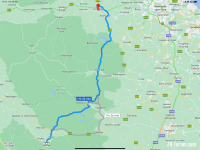
 Scottish Borders
It’s generally accepted that the 35i and 35is handling seems somewhat wayward when compared to their less powerful and lighter siblings.
When, why and how people reach these conclusions is usually either by comparison with other cars eg G29s or driven by the age, mileage and condition of said 35i /35is.
How and where you drive has a big bearing on your perceptions..for me hooning with like minded pals over 10k miles in Scotland was my reference point.
My journey on this topic started with the acquisition of a stock 2011, 50k mile 35is last year.
The reference was my much loved 20i MSport sporting H&R ARBs, Bilstein B8 shocks, E90 M series steering linkages and rear swinging arm bushes with 18” Zito 935s with GY Asy 5 in 235/40 265/35 sizes topped off with a Quaife LSD.
To say I was disappointed was an understatement.
In comparison to said 20i MSport the 35is was slow to turn, unsteady on its new heading, a very uncomfortable ride, wallowing, rolling and bottoming out with almost no provocation. The telemetry was ‘don’t push me any further or I will bite’
It’s taken a long time and not inconsiderable thought and experimentation along with lots of new hardware to resolve matters.
Looking at the chassis there are a number of observations.
All E89 cars posses identical chassis with the exception of springs and dampers.
Given a 156-335 BHP and a 1400-1525kg weight range it’s not surprising that power, weight and time take more of a toll on the 35i family.
It appears that the compromise of using identical chassis components bar springs n dampers, plus cost engineering trade offs plus age hampers the 35i in ways that it’s other siblings can cope with.
On my car the front adaptive dampers were leaking, the rears although no fluid leaks had the most horrible combination of aggressive compression damping and almost no rebound damping. Switching into Sports mode just made matters worse.
Fitting Ohlins R+T made an enormous improvement to ride, comfort and handling..although it took several variations on adjusting the ride height and damping..in the end the stock Ohlins setting for both ride height and damping were spot on…ride height as per stock E89s save 5mm nose down and 10 clicks out on front and rear dampers.
Moving from standard sizes and run flats to 18” GY Asy 5 yielded very good results…over tyreing to 19” 437Ms wearing Michelin PS4S in 235/35 and 275/30 yielded a small improvement..finally Conti Sports 7 on narrower 19” APEC Arc8 rims in 245/35 and 275/30 gave a marked improvement in feel, ride and grip, both front and rear.
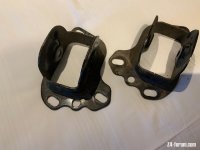
With M3 rear swinging arm bushes, plus the front M3 steering linkages and H+R ARBs gave further improvements in steering..however there was still a vagueness in the steering especially when chasing fellow Zedders down unfamiliar roads.
The top steering linkage bearing was replaced with a ‘mono ball’ design which allows heavier loads without any deflection..I didn’t find that this really did much..maybe due to new and better bearings in the M3 steering arms already.
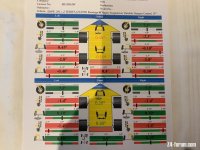
Discussions with Ohlins UK support suggested increasing front camber from 0.5 to 2.5 degrees and putting the rears at 2.5 also.
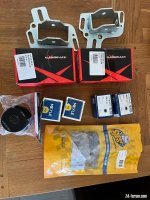
Adjustable camber plates increased camber from 0.5 to 2.5 and trail from 5 to about 7. Adjustable rear camber arms allowed the rears to come to about 2.5.
The final piece which may have been obvious to some is the change of the steering rack tie rods to Meyle HD versions..this removed the vagueness completely, quite a revelation.
In conclusion my analysis is that age and time wears out the 35i chassis components more quickly and to greater effect when compared to lighter, less powerful siblings.
The extra weight and power plus more thrust and brake causes greater deflections in the steering and suspension related components.
All these factors results in a chassis that is unhappy with its power train.
Now at 400 bhp and over 650nm torque the Quaife LSD does a fantastic job of managing the thrust working well with the chassis mods. I can boot the car now almost anywhere without feeling like a near death experience.
Downsides apart from cost (a lot of) are more NVH from the camber plates.
When, why and how people reach these conclusions is usually either by comparison with other cars eg G29s or driven by the age, mileage and condition of said 35i /35is.
How and where you drive has a big bearing on your perceptions..for me hooning with like minded pals over 10k miles in Scotland was my reference point.
My journey on this topic started with the acquisition of a stock 2011, 50k mile 35is last year.
The reference was my much loved 20i MSport sporting H&R ARBs, Bilstein B8 shocks, E90 M series steering linkages and rear swinging arm bushes with 18” Zito 935s with GY Asy 5 in 235/40 265/35 sizes topped off with a Quaife LSD.
To say I was disappointed was an understatement.
In comparison to said 20i MSport the 35is was slow to turn, unsteady on its new heading, a very uncomfortable ride, wallowing, rolling and bottoming out with almost no provocation. The telemetry was ‘don’t push me any further or I will bite’
It’s taken a long time and not inconsiderable thought and experimentation along with lots of new hardware to resolve matters.
Looking at the chassis there are a number of observations.
All E89 cars posses identical chassis with the exception of springs and dampers.
Given a 156-335 BHP and a 1400-1525kg weight range it’s not surprising that power, weight and time take more of a toll on the 35i family.
It appears that the compromise of using identical chassis components bar springs n dampers, plus cost engineering trade offs plus age hampers the 35i in ways that it’s other siblings can cope with.
On my car the front adaptive dampers were leaking, the rears although no fluid leaks had the most horrible combination of aggressive compression damping and almost no rebound damping. Switching into Sports mode just made matters worse.
Fitting Ohlins R+T made an enormous improvement to ride, comfort and handling..although it took several variations on adjusting the ride height and damping..in the end the stock Ohlins setting for both ride height and damping were spot on…ride height as per stock E89s save 5mm nose down and 10 clicks out on front and rear dampers.
Moving from standard sizes and run flats to 18” GY Asy 5 yielded very good results…over tyreing to 19” 437Ms wearing Michelin PS4S in 235/35 and 275/30 yielded a small improvement..finally Conti Sports 7 on narrower 19” APEC Arc8 rims in 245/35 and 275/30 gave a marked improvement in feel, ride and grip, both front and rear.
With M3 rear swinging arm bushes, plus the front M3 steering linkages and H+R ARBs gave further improvements in steering..however there was still a vagueness in the steering especially when chasing fellow Zedders down unfamiliar roads.
The top steering linkage bearing was replaced with a ‘mono ball’ design which allows heavier loads without any deflection..I didn’t find that this really did much..maybe due to new and better bearings in the M3 steering arms already.
Discussions with Ohlins UK support suggested increasing front camber from 0.5 to 2.5 degrees and putting the rears at 2.5 also.
Adjustable camber plates increased camber from 0.5 to 2.5 and trail from 5 to about 7. Adjustable rear camber arms allowed the rears to come to about 2.5.
The final piece which may have been obvious to some is the change of the steering rack tie rods to Meyle HD versions..this removed the vagueness completely, quite a revelation.
In conclusion my analysis is that age and time wears out the 35i chassis components more quickly and to greater effect when compared to lighter, less powerful siblings.
The extra weight and power plus more thrust and brake causes greater deflections in the steering and suspension related components.
All these factors results in a chassis that is unhappy with its power train.
Now at 400 bhp and over 650nm torque the Quaife LSD does a fantastic job of managing the thrust working well with the chassis mods. I can boot the car now almost anywhere without feeling like a near death experience.
Downsides apart from cost (a lot of) are more NVH from the camber plates.