Wanted to get peoples thoughts on how safe wheel spacers are on z4ms which are tracked. There's some stuff floating around the net that suggests it's not the best idea to have spacers for a car that is tracked however would rather go by forum experiences, any input greatly appreciated!!

You are using an out of date browser. It may not display this or other websites correctly.
You should upgrade or use an alternative browser.
You should upgrade or use an alternative browser.
Spacers - safe on track?
- Thread starter Viren
- Start date
A
Anonymous
Guest
I'm no expert but I believe spacers puts extra strain on the bolts which would not be such a great idea when putting your car under pressure

 Liverpool
Depends on the size of the spacer.
5-10mm with the correct length bolts are fine (mine have been). The more extreme 20mm-50mm ones less so.
But there are plenty of Ring toys with front tracks extended with spacers and they put much more force through those bolts/studs due to aggressive camber and wider tyres.
5-10mm with the correct length bolts are fine (mine have been). The more extreme 20mm-50mm ones less so.
But there are plenty of Ring toys with front tracks extended with spacers and they put much more force through those bolts/studs due to aggressive camber and wider tyres.
Can I bust a few myths.
1) Fitting wheel spacers, can never change the strain a wheel bolt experiences. Strain is defined as the force per unit cross sectional area. On a M12x1.5 thread size bolt (which is what all E85, E86 and E89 have). The stain is the same - regardless of the length of the bolt. The standard bolt length is 26mm (from base of the seat to the tip). I've used 38mm bolts to accompany my 12mm spacers. The strain in either bolt is the same. Think of a metal chain lifting a heavy load - each link of the chain experiences the same force - regardless of the length of the chain.
2) Secondly, it is a common misconception that wheel bolts experience a bending forces. If they did the length would matter. Wheel bolts (or studs for cars with wheel nuts), only ever experience a tensional force. The wheel is centered to the hub with the central spigot (72.6mm diameter in the case of all Z4 BMWs). The bolts then clamp the back surface of the wheel against the hub so tightly, that it is, in affect, a clutch. It is simply the friction force between the back of the wheel and hub surface that transmits all loads (vehicle weight, engine power, braking force etc...).
If a wheel spacer is correctly designed with the correct sized spigot in the middle (no more than 0.1mm of slack as it slips over the hub spigot), and with machined surfaces that are 100% parallel, then it will perform perfectly for track (or any other) use. Its also nice to get a spacer with a decent overall diameter. That's because the spacer acts as an intermediate clutch between the hub surface and the back of the wheel. I fitted 12mm spacers with 149mm diameter, which I was happy with. I also bough a pair of 20mm spacer with 143mm diameter which I was not so confident about.
3) Last myth relates to fast wearing of hub bearings. I remember this being said back in the days when we put 3" wheel spacers on classic Minis! Its not the spacer that puts undue forces on the wheel bearings - its the leverage effect of changing the horizontal distance from the wheel bearing face to the centre point of the tyre contact patch. You could fit a wheel with a smaller off-set and then compensate with spacers and the wheel bearing wouldn't know any different. You could fit a 5mm, 12mm or 20mm spacer to a BMW and the change in the leverage effect be so small that it makes no difference. 3" (or 76mm) spacers might be a different matter!
Lastly Its worth considering the extra long wheel bolts that go with spacers. They MUST, MUST, MUST have the term '10.9' embossed on them. This refers to the tensile strength. This is not a case where more is better. 12.9 is a higher tensile strength - but its brittle. 8.9 is Ok but can stetch if you remove/fit wheels often. 10.9 is ideal, and any reputable spacer manufacturer will only sell these.
To sum up - If you fit well made wheel spacers with proper bolts there is absolutely nothing to worry about
Disclaimer: This information is based on my 25 years of engineering experience, but I am sure other engineers may have varying opinions.
1) Fitting wheel spacers, can never change the strain a wheel bolt experiences. Strain is defined as the force per unit cross sectional area. On a M12x1.5 thread size bolt (which is what all E85, E86 and E89 have). The stain is the same - regardless of the length of the bolt. The standard bolt length is 26mm (from base of the seat to the tip). I've used 38mm bolts to accompany my 12mm spacers. The strain in either bolt is the same. Think of a metal chain lifting a heavy load - each link of the chain experiences the same force - regardless of the length of the chain.
2) Secondly, it is a common misconception that wheel bolts experience a bending forces. If they did the length would matter. Wheel bolts (or studs for cars with wheel nuts), only ever experience a tensional force. The wheel is centered to the hub with the central spigot (72.6mm diameter in the case of all Z4 BMWs). The bolts then clamp the back surface of the wheel against the hub so tightly, that it is, in affect, a clutch. It is simply the friction force between the back of the wheel and hub surface that transmits all loads (vehicle weight, engine power, braking force etc...).
If a wheel spacer is correctly designed with the correct sized spigot in the middle (no more than 0.1mm of slack as it slips over the hub spigot), and with machined surfaces that are 100% parallel, then it will perform perfectly for track (or any other) use. Its also nice to get a spacer with a decent overall diameter. That's because the spacer acts as an intermediate clutch between the hub surface and the back of the wheel. I fitted 12mm spacers with 149mm diameter, which I was happy with. I also bough a pair of 20mm spacer with 143mm diameter which I was not so confident about.
3) Last myth relates to fast wearing of hub bearings. I remember this being said back in the days when we put 3" wheel spacers on classic Minis! Its not the spacer that puts undue forces on the wheel bearings - its the leverage effect of changing the horizontal distance from the wheel bearing face to the centre point of the tyre contact patch. You could fit a wheel with a smaller off-set and then compensate with spacers and the wheel bearing wouldn't know any different. You could fit a 5mm, 12mm or 20mm spacer to a BMW and the change in the leverage effect be so small that it makes no difference. 3" (or 76mm) spacers might be a different matter!
Lastly Its worth considering the extra long wheel bolts that go with spacers. They MUST, MUST, MUST have the term '10.9' embossed on them. This refers to the tensile strength. This is not a case where more is better. 12.9 is a higher tensile strength - but its brittle. 8.9 is Ok but can stetch if you remove/fit wheels often. 10.9 is ideal, and any reputable spacer manufacturer will only sell these.
To sum up - If you fit well made wheel spacers with proper bolts there is absolutely nothing to worry about
Disclaimer: This information is based on my 25 years of engineering experience, but I am sure other engineers may have varying opinions.
Brilliant, what an answer. That was exactly the type of informative response I was looking for!!! Thank u!!
I'm looking to get 10mm for rear and 12mm for front. Any recommendation of which spacers and bolts to get. I always worry about Ebay bolts, would rather go with a reputable company.
I'm looking to get 10mm for rear and 12mm for front. Any recommendation of which spacers and bolts to get. I always worry about Ebay bolts, would rather go with a reputable company.
mmm-five said:H&R (Trak+) and Eibach (Pro-Spacer) both do spacer kits - including bolts.
There's a guy on M3Cutters who sells H&R and Bimmec ones.
Cheers!
Never heard of bimecc, any opinions on them vs eibach/h&r?
These are the spacers I used for my 30.Si...
https://www.ebay.co.uk/itm/362384864352
They are well made and have the grade 10.9 bolts I mentioned in my earlier post. I was really impressed as the fit and in use there has been no vibrations or any other problems. I fitted them on the rear - not sure what 12mm would be like on the front though. I'm not a big fan of messing with the scrub radius, so I played safe with a 5mm set on the front...
https://www.ebay.co.uk/itm/362107810524
I used Bimecc spacers on an old Porsche. They were nicely made too, but expensive.
https://www.ebay.co.uk/itm/362384864352
They are well made and have the grade 10.9 bolts I mentioned in my earlier post. I was really impressed as the fit and in use there has been no vibrations or any other problems. I fitted them on the rear - not sure what 12mm would be like on the front though. I'm not a big fan of messing with the scrub radius, so I played safe with a 5mm set on the front...
https://www.ebay.co.uk/itm/362107810524
I used Bimecc spacers on an old Porsche. They were nicely made too, but expensive.
No idea, as I've only ever used the H&R Trak+ ones.Viren said:Never heard of bimecc, any opinions on them vs eibach/h&r?

Zedtastic said:I played safe with a 5mm set on the front...
https://www.ebay.co.uk/itm/362107810524
I used Bimecc spacers on an old Porsche. They were nicely made too, but expensive.
Going with whats been said in this thread, its easy to see this choice is NOT safe, esp for trackdays.
Spacers without hubrings that center correctly to the hub DO stress bolts and CAN shear them off.
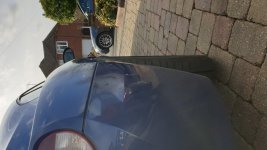
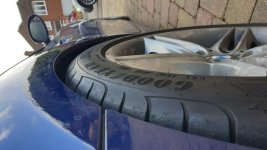
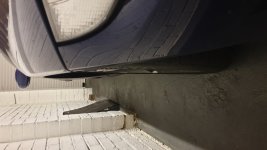
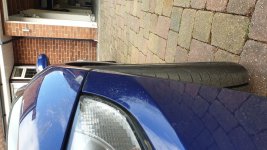
So fitted the spacers, 12mm all round and no rubbing! I'm on blistein b12 kit, 224 wheels with standard tyre sizes.
Rear looks perfect and front looks good, although 15mm at the front would be ideal but a bit tight on clearance.
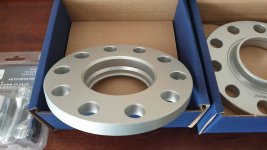
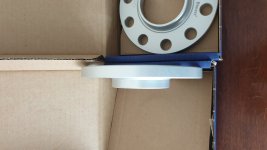
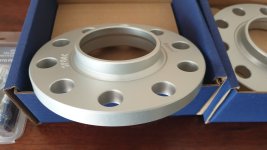
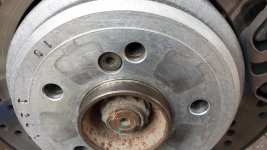
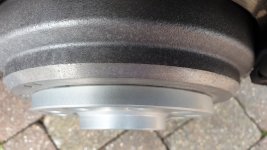
The bimecc spacers look like a quality bit of kit and fit perfect, can see by the pics below.
I've definitely noticed a change to handling, more positive turn in.
Few tips when fitting:
Make sure all mating faces are clean and do not add and grease between them!
You can add slight bit of grease on the hub ring but not the mating faces.
Other than that a basic but good mod (pics in garage are before spacers, outside are after spacers)
Rear looks perfect and front looks good, although 15mm at the front would be ideal but a bit tight on clearance.
The bimecc spacers look like a quality bit of kit and fit perfect, can see by the pics below.
I've definitely noticed a change to handling, more positive turn in.
Few tips when fitting:
Make sure all mating faces are clean and do not add and grease between them!
You can add slight bit of grease on the hub ring but not the mating faces.
Other than that a basic but good mod (pics in garage are before spacers, outside are after spacers)
Attachments
-
 20190206_130748.jpg181.3 KB · Views: 3,098
 -
 20190206_130735.jpg166.6 KB · Views: 3,098
 -
 20190209_125530.jpg218.2 KB · Views: 3,098
 -
 20190206_130803.jpg162.8 KB · Views: 3,098
 -
 20190209_125539.jpg194.4 KB · Views: 3,099
 -
 20190206_145457.jpg177.9 KB · Views: 3,098
 -
 20190209_125555.jpg280.7 KB · Views: 3,098
 -
 20190209_121512.jpg272.6 KB · Views: 3,098
 -
 20190206_145602.jpg173.8 KB · Views: 3,098
 -
 20190209_121712.jpg216.4 KB · Views: 3,098