Money shift to 9000+

Shakespeares

Member
 TX, US
Guys, I just completed my first money shift. I was trying to do 4-5 but actually 4-3... Rear wheels had locked, and depressed clutch immediately.
Had a quick look on the dash, the pointer was still over 9000 RPM. Can't imagine what is the maximum RPM I reached there. Seems everything still fine, no noise, nothing.
Is there any specific check I should do?
 
Eep!

Honestly, you've got two choices really;

1) Any Damage is theoretically already done, so just pretend it didn't happen and carry on driving it until you get a problem :lol:

2) Cam covers off and check for evidence of damage (broken valve springs/valve/follower spacing out of tolerance/loose/damaged followers indicating bent valves), whip the spark plugs out and check for any valve/piston contact with a borescope (if the valve springs didn't close the valves fast enough at whatever peak rpm you reached), and finally pull the sump off and check the bottom end bearings. Unless you do a full engine teardown you'll never know if you've stretched/damaged the rods - the forces due to acceleration/deceleration of the pistons at whatever speed your engine will have reached will be pretty significant, but perhaps unlikely to have resulted in damage for the fraction of a second you buzzed it, but nothing is guaranteed...

Good luck with it, that's rough luck :(

If it's any consolation I had an old Peugeot 306 GTi6 and did exactly the same thing as you; went to top of 4th gear (7.3krpm) went for 5th, accidentally got 3rd, rev counter went off the clock past 9 for a good few seconds before I realised. Car ran absolutely fine, did another 20k miles before I sold it on :lol:
 
Surprisingly easily done... i had an old e46 track car that was super loose across the gate, with no self centering. Nearly shifted into 1st when I was aiming for third :o

Hopefully, you've got away with it. You could examine the oil for fine metallic particles, or maybe a comp test, but it ain't gonna change anything. If it starts running rough then check timing too. But hopefully, it'll be OK...
 
Ed Doe said:
Eep!

Honestly, you've got two choices really;

1) Any Damage is theoretically already done, so just pretend it didn't happen and carry on driving it until you get a problem :lol:

2) Cam covers off and check for evidence of damage (broken valve springs/valve/follower spacing out of tolerance/loose/damaged followers indicating bent valves), whip the spark plugs out and check for any valve/piston contact with a borescope (if the valve springs didn't close the valves fast enough at whatever peak rpm you reached), and finally pull the sump off and check the bottom end bearings. Unless you do a full engine teardown you'll never know if you've stretched/damaged the rods - the forces due to acceleration/deceleration of the pistons at whatever speed your engine will have reached will be pretty significant, but perhaps unlikely to have resulted in damage for the fraction of a second you buzzed it, but nothing is guaranteed...

Good luck with it, that's rough luck :(

If it's any consolation I had an old Peugeot 306 GTi6 and did exactly the same thing as you; went to top of 4th gear (7.3krpm) went for 5th, accidentally got 3rd, rev counter went off the clock past 9 for a good few seconds before I realised. Car ran absolutely fine, did another 20k miles before I sold it on :lol:

I am planning to do a valve gap check. It was on the list for months, just didn't get time to get it done. Will check the springs by eye tho.
 
brillomaster said:
Surprisingly easily done... i had an old e46 track car that was super loose across the gate, with no self centering. Nearly shifted into 1st when I was aiming for third :o

Hopefully, you've got away with it. You could examine the oil for fine metallic particles, or maybe a comp test, but it ain't gonna change anything. If it starts running rough then check timing too. But hopefully, it'll be OK...

I think I will bring it back to a dyno. If it make the similar power like last time, I guess I am fine?
 
Shakespeares said:
I am planning to do a valve gap check. It was on the list for months, just didn't get time to get it done. Will check the springs by eye tho.

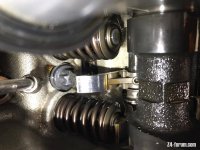
Sounds sensible - Make sure you take a careful look at the springs, my understanding is that often the inner spring can snap but it's not immediately obvious because it's quite difficult to see (See pic below of mine whilst in for diagnosis for ref - note the follower has been slid down the follower post to expose the shim seat to check if it had spat a shim in this pic).
The other thing that can potentially happen is they can spit the valve shims out. Again quite rate, but worth checking as there's more scope for that sort of thing to have happened if you've had it at high rpms where the spring might not be returning the valve to the follower fast enough to maintain contact at all times.

IMG-20200623-WA0007.jpg
 
Ed Doe said:
Shakespeares said:
I am planning to do a valve gap check. It was on the list for months, just didn't get time to get it done. Will check the springs by eye tho.

Sounds sensible - Make sure you take a careful look at the springs, my understanding is that often the inner spring can snap but it's not immediately obvious because it's quite difficult to see (See pic below of mine whilst in for diagnosis for ref - note the follower has been slid down the follower post to expose the shim seat to check if it had spat a shim in this pic).
The other thing that can potentially happen is they can spit the valve shims out. Again quite rate, but worth checking as there's more scope for that sort of thing to have happened if you've had it at high rpms where the spring might not be returning the valve to the follower fast enough to maintain contact at all times.

IMG-20200623-WA0007.jpg

The follower just slide off? That is unbelievable. I thought the wire clamps were quite reliable by look at how they work. How do you check the inner springs? Looking through the outer springs?
 
Shakespeares said:
I think I will bring it back to a dyno. If it make the similar power like last time, I guess I am fine?

It'll show if there's something like a compression issue, but absolutely wont guarantee that it's fine(!) By revving the engine way past the manufacturer-defined safe limit, you have exposed a lot of the rotating assembly to much greater forces than it has been designed for. This may result in all sorts of issues - heat in the bearings, resulting in the oil film breaking down and causing bearing wear in the bottom end, Stretch/compression loadings of the rods as the pistons are accelerating and decelerating way faster than designed resulting in stress cracks in the rods, or stretching of the rods, Valve springs being compressed and expanding on a totally different curve to normal, resulting in potential for snapping to name but a few potential issues.

This is why I said basically any damage is already done, so the best thing you can do is check the cheap/obvious things like you're doing and then just drive it. If it develops a problem, it is what it is, you either wait until it maifests and then tear the engine down to find/fix it, or you tear the engine down pre-emptively. The only unknown is the collateral damage if you leave an issue potentially unfixed, but you're at the point either way where the cost of a full engine tear down even to inspect for damage is near enough the cost of a 2nd hand engine, so you pays your money you takes your choice... !
 
Shakespeares said:
The follower just slide off? That is unbelievable. I thought the wire clamps were quite reliable by look at how they work. How do you check the inner springs? Looking through the outer springs?

I think there's a locating pin to keep it locked in place on the post, but honestly not 100% sure, I've had to get my followers replaced but I had a specialist do it as part of a wider rebuild I ended up needing so never got into the minutiae!

Yeah you need to try to look through the springs, which you'll likely only be able to do with the follower removed so the spring is not under any compression.

The other thing to check for, although not entirely fool-proof is if there are any bits of snapped spring knocking around in the top-end - normally they get stuck in the oil drains out of the top end - you can kinda see one of the top end oil drains just behind the follower in my pic above...
 
Shakespeares said:
You are so right. Just drive it. If someday the engine decide to die, then it is a time to upgrade it :rofl:

I'd still personally do a cursory check of the followers/springs/shims to check it's not scored cam lobes/follower faces/snapped a valve spring/spat a shim, and I'd definitely still stick a borescope down the spark plug holes to check for valve-piston contact, but yes after that (and maybe a quick compression check), I'd just drive it :thumbsup:

Maybe if after the above cursory checks, and a few months' worth of driving/enjoying it, then maybe factor in doing the rod bearings. That'll be getting on for a £1300 bill from a decent specialist hence why I'd do the cheap/easy checks above and get some miles under it to ensure it's ok otherwise before spending money on doing the bearings(!)
 
I had an early 520 E12. back in the day and at top Revs found 3 gear ….the rest is history…still finding bits of engine on the Motorway 🤔😞🙃😟
 
Ed Doe said:
Shakespeares said:
You are so right. Just drive it. If someday the engine decide to die, then it is a time to upgrade it :rofl:

I'd still personally do a cursory check of the followers/springs/shims to check it's not scored cam lobes/follower faces/snapped a valve spring/spat a shim, and I'd definitely still stick a borescope down the spark plug holes to check for valve-piston contact, but yes after that (and maybe a quick compression check), I'd just drive it :thumbsup:

Maybe if after the above cursory checks, and a few months' worth of driving/enjoying it, then maybe factor in doing the rod bearings. That'll be getting on for a £1300 bill from a decent specialist hence why I'd do the cheap/easy checks above and get some miles under it to ensure it's ok otherwise before spending money on doing the bearings(!)

how often will you change your rod bearings?
 
Shakespeares said:
how often will you change your rod bearings?

Hopefully only once :lol:

To elaborate, the 10w60 oil in these is very thick and doesn't provide optimal protection until up to temperature. This means it's essential to drive the car gently and not rev it hard or use large throttle inputs until the oil is warm, as this is what causes premature rod bearing wear and failure.

Given the potential cost to repair a spun rod bearing (bottom end tear down minimum, probable new crank (£2500 parts cost), probable replacement pistons (circa £2800 for 6-off) etc etc. and the fact that it's simply impossible to guarantee how the previous owner(s) drove the car from cold, I would personally factor in replacement bearings pretty soon after purchasing the car if I were buying from scratch again.

Conversely, I think you can be reasonably certain that if the rod bearings had been done before in the life of your car, they would have been done by someone looking to sort this preventatively and therefore the likelihood is they've looked after the car and been careful to warm it up properly. So in that case I'd be a little more relaxed, but if there's no history of bearings being done I'd 100% be looking to get them done pretty soon after purchase, particularly if the car is over 50k miles by this point
 
Ed Doe said:
Ed Doe said:
Shakespeares said:
how often will you change your rod bearings?

Hopefully only once :lol:

To elaborate, the 10w60 oil in these is very thick and doesn't provide optimal protection until up to temperature. This means it's essential to drive the car gently and not rev it hard or use large throttle inputs until the oil is warm, as this is what causes premature rod bearing wear and failure.

Given the potential cost to repair a spun rod bearing (bottom end tear down minimum, probable new crank (£2500 parts cost), probable replacement pistons (circa £2800 for 6-off) etc etc. and the fact that it's simply impossible to guarantee how the previous owner(s) drove the car from cold, I would personally factor in replacement bearings pretty soon after purchasing the car if I were buying from scratch again.

Conversely, I think you can be reasonably certain that if the rod bearings had been done before in the life of your car, they would have been done by someone looking to sort this preventatively and therefore the likelihood is they've looked after the car and been careful to warm it up properly. So in that case I'd be a little more relaxed, but if there's no history of bearings being done I'd 100% be looking to get them done pretty soon after purchase, particularly if the car is over 50k miles by this point

The first bearing replacement was done at 60k miles. And I added a supercharger when 90k miles. Now it is 120k
 
Shakespeares said:
The first bearing replacement was done at 60k miles. And I added a supercharger when 90k miles. Now it is 120k

Oooh that sounds cool - got any pics of the car?!

I'd be potentially thinking about doing the rod bearings soonish - they've done 60k and could have been subject to more heat etc with the charger - wouldn't hurt to get them done!
 
Ed Doe said:
Shakespeares said:
The first bearing replacement was done at 60k miles. And I added a supercharger when 90k miles. Now it is 120k

Oooh that sounds cool - got any pics of the car?!

I'd be potentially thinking about doing the rod bearings soonish - they've done 60k and could have been subject to more heat etc with the charger - wouldn't hurt to get them done!

Actually I dont have some good pictures of it. I got the G-power supercharger kit
 
Years ago a mate did that in his dads new Cortina 3rd to 2nd at speed, broke all the rockers from memory, not a popular guy
 
Back
Top Bottom