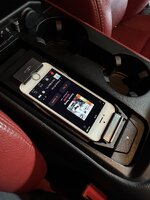
A BMW fitted with a Combox supports significantly larger USB memory sticks (typically 128GB to 512GB+ tested, often relying on exFAT) compared to a MULF2 High (most stable at 32GB, max 64GB, strictly requiring FAT32).
The Combox is an upgraded module, usually found in later E-series (2011+) and F-series, which supports modern file systems and larger capacities, whereas the MULF2 (most commonly in 2007-2010 models) is limited by older hardware and software.
Memory Stick Capacity Comparison
MULF2 High: 32GB is the commonly reported "safe" limit. While 64GB can work, it requires specific FAT32 formatting and might encounter slow loading times or read errors.
Combox: Users frequently report success with 128GB and 256GB sticks, with some reporting functionality up to 512GB and 1TB SSDs, particularly when formatted with exFAT.
Technical Limitations
Feature MULF2 High Combox Media/Telematics
Common Capacity 32GB (64GB max) 128GB - 512GB+
Format Strictly FAT32 FAT32 or exFAT
File Limit Lower (~16k tracks typical) Higher (40,000+ tracks)
Album Art Limited support Full support
Crucial Factors
File System Format: MULF2 must be formatted in FAT32. Windows does not natively allow formatting drives larger than 32GB to FAT32, requiring third-party tools. Combox supports exFAT, which works seamlessly with large drives.
Drive Type: External Hard Drives (HDD) often fail to get enough power, while flash-based "stubby" USB sticks are recommended to allow the armrest lid to close.
Loading Times: While the Combox supports larger sticks, indexing time can increase if the drive is filled with high-bitrate files.


 Abertawe


 Scottish Borders