

 At the summit of the picturesque fens
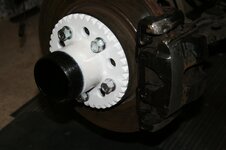
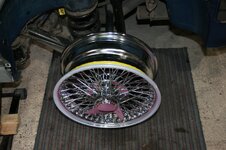
My 'Fauxrrari' has wire wheels which are held on (!) by knock on spinners. There are hub adapters (as per the photo) which bolt to the Z3 hubs. These have a huge thread which the spinner screws onto. The threads are handed on opposite sides of the car, so the theory is that they can only tighten not loosen when driving.
Well...my wheels have constantly been coming loose after a few miles of driving. I was initially using the traditional method of whacking the ears of the spinners with a big white rubber mallet. This wasn't tightening them enough. So....I used a spinner tool which came with the wheels. This is a big aluminium lump which sits over the three ears of the spinner, with a 38mm socket on. This was connected to a socket handle and a 6ft pry bar on the end of that.
Hanging on the end of the pry bar I got the spinners to tighten more. Happy days!
Nope. The wheels would take longer to loosen than before but still were coming loose. I had run out of ideas.
I called a company who I know supply the type of wheels I have (they didn't supply mine though). I was told to use grease! Grease.....on the outside taper of the spinner and the spinner threads, then just use a rubber mallet.
I was confused. How can using grease (which is meant to help slippage) stop my spinners from loosening? "Just try it" was the answer.
It has worked a treat. I can tighten the spinners more with a rubber mallet than I could with a 6ft bar and they don't come loose!!
I still don't understand why, though. I thought I knew a bit about physics but this has completely baffled me. I have never ever greased or lubricated mating surfaces before.
Well...my wheels have constantly been coming loose after a few miles of driving. I was initially using the traditional method of whacking the ears of the spinners with a big white rubber mallet. This wasn't tightening them enough. So....I used a spinner tool which came with the wheels. This is a big aluminium lump which sits over the three ears of the spinner, with a 38mm socket on. This was connected to a socket handle and a 6ft pry bar on the end of that.
Hanging on the end of the pry bar I got the spinners to tighten more. Happy days!
Nope. The wheels would take longer to loosen than before but still were coming loose. I had run out of ideas.
I called a company who I know supply the type of wheels I have (they didn't supply mine though). I was told to use grease! Grease.....on the outside taper of the spinner and the spinner threads, then just use a rubber mallet.
I was confused. How can using grease (which is meant to help slippage) stop my spinners from loosening? "Just try it" was the answer.
It has worked a treat. I can tighten the spinners more with a rubber mallet than I could with a 6ft bar and they don't come loose!!
I still don't understand why, though. I thought I knew a bit about physics but this has completely baffled me. I have never ever greased or lubricated mating surfaces before.


 South Lanarkshire


 Devon
Devon