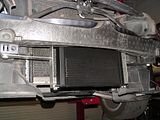
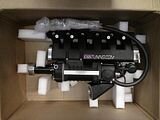
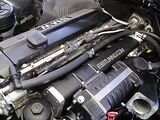
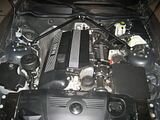
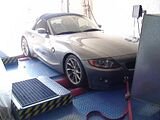
ESS Supercharger installed and dyno'd on Z4 2.5i

azroadie

Member
 Scottsdale, AZ
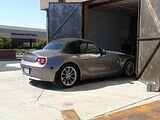
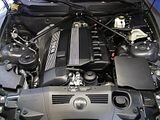
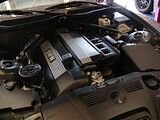
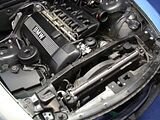
I picked up my Z4 with the newly installed ESS supercharger this weekend! I have tons of pics and dyno runs so I'll get to those in a bit.

For now...What a HUGE difference! I now have to relearn to drive the car with the extra power! I used to be able to just floor it and keep the car under control. Now I actually have to learn to modulate the throttle so I don't spin the wheels uncontrollably 8)

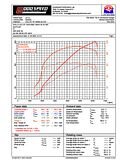
I started with my stock Z4 2.5i with a supersprint exhaust. Then I added a BMC airfilter and ESS TS2 supercharger. Here's the quick and dirty. On the baseline runs, it did 195hp and 192ft/lbs with the superspint exhaust...actually pretty high. With the kit I ended up with 300hp and 268ft/lbs!!!...and that's with 91 octane and a hot 93 degrees outside! So I'm very pleased! I'm lucky enough enough to have a great shop (Goodspeed) near me that can actually measure power/torque at the crank as they can measure the real drive train losses through the RPM range. So these numbers are real, not estimations. That data is on the first dyno sheet. You'll see the drive train loss curve in green at the bottom. The second sheet contains the wheel numbers for those who are used to seeing that.

Here's a link to the dyno that was used at Goodspeed if you want to read about measuring power at the crank or get an explanation of their dyno sheet. http://www.goodspeedperformance.com/dyno.php#About The Maha Dyno
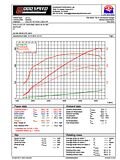
th_Dyno_ESS.jpg

th_Dyno_ESS_wheel.jpg
 
chris said:
Good man :thumbsup: bet she's lively to drive now :D
LSD to come?

Maybe...but I'm going to try to resist. The supercharger was my way of delaying the purchase of an M3. I want to keep this car for many years as a practical weekend trip vehicle and get something else for the track down the road. But at some point I'll need a car with more than 2 doors! :P
 
Another ess road rocket, bet ur car hauls with that torque!!!!

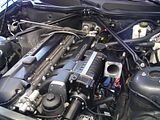
Real nice numbers on the dyno, ok ok enough teasing...... We are all pistonheads here so...detailed motor pics please!!!!!! I love how ess intergrate the twin screw on these motors, they look so stock!! Ts has a nice sound also.
 
Have you both got the newer smaller pulley as well? Although it no fun installing it at first :evil:
 
Great results :thumbsup: , can't wait to see pics of the install.

Now if only I can convince the Taxman that his money would be better spent elsewhere. :wink:
 
Uploading to photobucket now and will post some of the step-by-step photos tomorrow. Honestly, I don't look under the hood much. So looking at the results...the install is super clean!
 
that feeling when your opening the ESS s/c box... priceless! hows your idle, i hear the ts kits can have idle issues?
im just waiting for another uk ESS charged car now so i can do a mini meet!!
 
Nice power figures, do youu mind me asking how much the parts and labour was?

Also intersted to hear how the mpg figures compare.

Will you need to upgrade your brakes?
 
Sorry for the slow reply...busy weekend!!!

I have a great relationship with the guys at goodspeed and they have a good deal of experience with these units as ESS USA is here in town. You'll need to allow for at least 10 hours labor. Then tack on dyno time if you want that testing too.

As far as MPG goes...did about 12.5 mph on the first day!!! :D Of course, that was on a closed off alley doing constant 0-60 runs with no normal driving. Since then, I'm still pretty heavy on the throttle since it's fun and new. But the last half tank or so has me at 31mpg during normal driving...which actually seems better! So my thoughts are this...I'm getting so much more power at low end that I'm not driving around at 5000rpm all the time to extract power. So while I'm sure it's using more fuel at a given RPM, maybe I'm not pushing it as hard now? So I'm still seeing good fuel use numbers. But trust me, when you get on it, the fuel gauge goes down fast!

I have no plans on upgrading the brakes. The car stopped fine from 75mph before the supercharger and should stop from 75mph just as well with it. I'm not going any faster so I don't see the point. Plus, the current brakes were made to handle far more speed than I'm ever going to throw at it. If I were building up a track machine, it would be a different story.

I am finding myself wanting a LSD though! It's very easy to spin the inside tire coming out of a turn now!!!!

I'm also getting used to the new throttle response. I'm still a bit jerky at the shifting...particularly at slow speeds. It's definitely tuned for aggressive driving and the throttle shines when you really get on it!
 
I think any SC non-M needs an LSD fitted. You'd get sooo much more out of the SC with one.... maybe a change in your Final Drive also??

I still think you should do something with your brakes... at least an upgrade to Si brakes, which I suggested in your previous thread. It's a VERY cheap mod and will make a big difference especially from a 2.5.
 
Yep, I'd definately fit an LSD now with 300bhp.

It will be really noticeable and transform the car now.

I want a TS2 kit and LSD but when you add up the numbers an M model or TVR Tamora seem better value. A shame... i bet that are rather smashing to drive all said and done... something to experience :D

Dave
 
Beautiful!! :thumbsup: :thumbsup: Love a bit of Forced Induction goodness.

Hows the clutch holding up!? I don't really know how they got 300FWHP from 230.5WHP though... 49.1HP in drivetrain losses (plus 20HP correction factor) sounds ridiculous! One area i wish Europe would follow the USA, in dropping these stupid fudge factors. That says a Toyota Aygo engine at full chat wouldn't even be able to move the wheels/gearbox car without any resistance! :roll:

I once asked a Rolling Road operator what his 4x4 fudge factor was...
RR Guy: "About 17%"
Me: "So a Bugatti Veyron loses 170BHP JUST to spin the drivetrain at full speed in 4th gear!?"
RR Guy: "Er.. Yeah!"
Me: "So if i put a 100HP engine in the same car, how much power would it lose to spin the wheels then?"
RR Guy: "17...? ohh.." *Looks like he's seen a ghost*
 
Keep in mind that this is NOT a fudge factor. Goodspeed has one of the few dynos that actually MEASURES drivetrain losses and generates numbers at the crank!!! It's the same dynos most of the big boy's use (BMW, Audi, etc.) and I believe the are the only shop with one in the U.S.

We get used to looking at WHP and using correction because most dynos can't measure drivetrain losses. I posted the wheel numbers (2nd plot) because this is what people are used to seeing. In the first plot you'll see the green line. This is a separate drivetrain loss plot that was measured throughout the RPM range. The "wheel horsepower" in the first plot is really a meaningless number. It's actually a "raw power." They just can't remove that number from the plot and it tends to confuse things.
 
Measuring drivetrain loss isn't that simple, unfortunately for everyone the world over :D

Your numbers stack up about right though, so I wouldn't worry!

As per the losses generally, coastdown is a bad measure, and is fudged/correlated against the peak wheels power to get a theoretical losses curve. Nothing is measured per se.

This confused me a few years ago discussing the GTR drivetrain losses.

Example, GTR makes ~ 500bhp and has about 420bhp at wheels say, so 80bhp losses.

Remap it to 600bhp, and the losses go up to maybe 100bhp... why? The drivetrain is the same, so why is 20bhp more lost?

The gears are, in isolation, levers that slide past each other. Increase the force through the levers and more friction is evident, which means more heat and vibration are generated, which means more energy lost transmitting that higher force.


There is no way to measure the losses under power, only the losses under coasting. This is then 'correlated' against numbers that are known from engine dynos and wheel dynos, to get a 'good guess' at the actual losses a car has from a combo of the wheel power and the coastdown loss, to get what must be the loss under power.


Getting it right isn't hard, within good percentages. What is hard is trusting that the correction is done honestly. In this case it would appear to have been done well, but it's common to find people fudging numbers to make cars look more powerful!

Dave
 
Sorry for kinda hijacking the thread with this dyno stuff! I just prefer wheel figures. After all, the wheels are what pushes the thing along, and what the dyno is connected too, to get a reading!

Mr Whippy said:
Example, GTR makes ~ 500bhp and has about 420bhp at wheels say, so 80bhp losses.

Remap it to 600bhp, and the losses go up to maybe 100bhp... why? The drivetrain is the same, so why is 20bhp more lost?

The gears are, in isolation, levers that slide past each other. Increase the force through the levers and more friction is evident, which means more heat and vibration are generated, which means more energy lost transmitting that higher force.

Not necessarily disagreeing with you here mate, but can you imagine 2-3 litres of transmission fluid soaking up nearly all that heat though? And if were talking large amounts of friction, that means metal on metal, and one dead gearbox. 100bhp is 74KW (or lets say 74 small electric heaters) worth of heat dissipation just from mechanical friction. There is absolutely no way i'm buying that! Nor the fact a Z4 loses 50bhp, however it is more realistic.

My old car (Rear Engined 160bhp RWHP) produced a 9.5% transmission loss on a DynoJet rolling road at Awesome GTI - this is the only dyno i've ever trusted! Id expect the same car/transmission to have <16% loss at 80bhp (50%), and <7% Loss at 320bhp (200%). Higher the power, smaller the % :)
 
Mr Whippy said:
As per the losses generally, coastdown is a bad measure, and is fudged/correlated against the peak wheels power to get a theoretical losses curve. Nothing is measured per se.

This confused me a few years ago discussing the GTR drivetrain losses.

Example, GTR makes ~ 500bhp and has about 420bhp at wheels say, so 80bhp losses.

Remap it to 600bhp, and the losses go up to maybe 100bhp... why? The drivetrain is the same, so why is 20bhp more lost?

There is no way to measure the losses under power, only the losses under coasting. This is then 'correlated' against numbers that are known from engine dynos and wheel dynos, to get a 'good guess' at the actual losses a car has from a combo of the wheel power and the coastdown loss, to get what must be the loss under power.
Dave

Not so sure I buy this logic (but I'm not sure it's wrong either). While I have a doctorate in enginering (and would love to claim to be the expert), I'm very new to this and would certainly welcome correction/explanation from someone (unlike myself) who has actually studied the topic. (so please chime in! :thumbsup: ) So I need to do more research, but I don't believe drag is a fudged factor. It is actually measured on the dyno. I believe it to simply be a measure of the forces/resistance (measured at the dyno) from the drivetrain...pretty simple in theory. This is why there is a curve with different losses at different rpms. This could explain a higher drivetrain loss on your GTR after the tune. I'm sure the peak power was at a different rpm pre and post tune, thus explaining the differences in the losses.

So why don't you think measuring the drag is valid? Any experts out there workimg for car companies that can shed some light? I know you are out there!
 
I've not studied it formally.

Drivetrain loss on coastdown is merely the losses generated applicable to the power being transmitted through the drivetrain at that time. Basically you are measuing engine braking power at the wheels.

Because you have a wheel power at full-engine output reading, and a drivetrain/power under engine braking reading, you can correlate using tables (made from doing engine dyno vs chassis dyno to populate them), and get a good idea of what the drivetrain ACTUALLY lost during the power run, and then add that to the wheels figure.

Done well, this is pretty accurate. This is how Dyno Dynamics chassis dynos do their calculations, and they are good!


Ed Butler, the losses are not just heat. Friction generates heat and sound. Sound covers frequencies we can hear, but also low-frequencies and vibration.
There are also more parts to heat than purely gearbox oil.

Tyre on roller, friction, sound and heat, lots of energy can be seen to be used there. Tyres deform lots, heat up lots, and make a racket rolling along pushing air around. Will change a bit transmitting more power, as it's a kind of circular lever. It'll also deform more if asked to transmit more force to the rollers/ground, which means more heat.

Wheel bearing, lots of little roller bearings getting warm, heating up the hub, bearing race, and bearing rollers themselves. Won't change much with added power.

Driveshaft bearings, same as above.

Differential, lots of oil to warm up, the housing to warm up. BMW M cars have passive cooling added to the diff to keep it's oil and housing cool!
Then in the diff you have what is essentially an array of levers. Metals rubbing against each other with an oil surface lubricant. Increase the force you need to transmit, and the friction force increases.

Prop shaft, same as bearings.

Gearbox, same as diff, just a whole load of levers. Make them transmit more force, then you generate more friction.


There are some elements which will take the same force to move no matter what force is transmitted via them (bearings etc), but the gearbox levers and diff levers are what absorb more energy the more force they are asked to transmit.


Anyone can do some maths and prove it to themselves. Try it with a bunch of rwd cars. What is their engine rated at, and what do they dyno at the wheels. You will see a clear correlation.


http://www.pumaracing.co.uk even has a few equations that are pretty damn accurate at correlating the above.

Quote Pumaracing: RWD cars - add 10 to the wheel bhp and then divide the result by 0.88

Which equates to, 10bhp is used no matter what, driving bearing friction, tyre friction and the like no doubt. Then 12% of any power transmitted is lost in the levering elements of the gearbox/diff, where more force = more friction.


I recommend reading the pumaracing site under power/torque and losses, a very good read.


Either way, I'm 100% behind the OP on their assertion. His dyno guy has done the job properly 100% Shown the wheels figure, and the corrected figure, and they stand up to scrutiny! Spot on work :D
 
Back
Top Bottom