hi everyone. anyone has expiriences in reparing a crack in wood dash trim? is the wood also cracked or just the lacquer finish? please help!

You are using an out of date browser. It may not display this or other websites correctly.
You should upgrade or use an alternative browser.
You should upgrade or use an alternative browser.
E85 dash wood trim crack repair
- Thread starter deluxor
- Start date
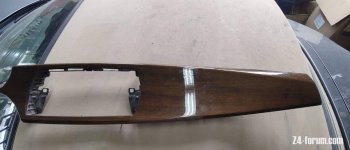
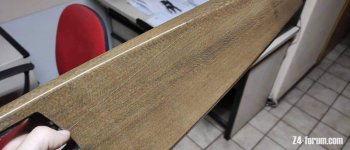
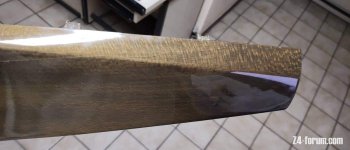
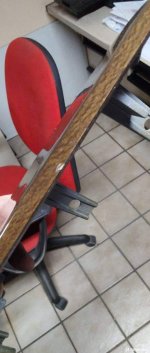

As it's off could you not fill it and then vinyl wrap the whole thing?

deluxor said:hi everyone. anyone has expiriences in reparing a crack in wood dash trim? is the wood also cracked or just the lacquer finish? please help!
Mine cracked when the car was 8 years old. My guess: the less rigid body of the convertible allows more torque or twisting of the body and panels than the coupe. I'd be interested in repair solutions if you find one.
Yes the timber has cracked but it is also repairable. The crack has absolutely nothing to do with the “less rigid body” actually the z4 roadster has an extremely rigid body, one of the most rigid of roadster bodies, ever experienced scuttle shake? You never will in a z4.
The reason the veneer has cracked is down to 2 reasons….. the veneer is bonded to aluminium which has a thermal coefficient of 23, the veneer (I’m guessing it is iroko from the pics, or something else dyed) will have a thermal coefficient of somewhere between 5 and 11, so in hot weather the aluminium will expand at a greater rate and stress the timber, this becomes even more stressful as timber is a hygroscopic substance and will expand and contract depending on the moisture content of the atmosphere. Timber expands and contracts across the grain, therefore on a hot day the aluminium expands, the timber expands a smaller amount but can also contract due to reduction in the moisture content (kiln dried timber has approx 10% moisture content) this then puts stress on the timber and pulls it apart along the grain. In the good old days companies such as Rolls/Bentley (in my home town of Crewe) only bonded veneers to plywood backing but this requires skill and cannot be automated hence bonding to pressed aluminium panels, automated on hydraulic presses.
The fix, assuming the veneer is only cracked and not delaminated from the aluminium … if you have zero skill and knowledge of working with timber I would get a French polisher to restore the veneer, the repair will make it as good as new, please don’t put some cheap crappy wrap on it like some bastardised blue Peter experiment!
If you fancy a go…….carefully sand back the acrylic lacquer to the veneer, not the whole of the dash but about 10mm either side of the crack. Lightly sand the whole dash for when you finally spray a finishing lacquer.
The crack will need filling, use a pale coloured wood stopper, Liberon is a really good make. Carefully sand back the filler. You now have a light coloured filled crack that stands out like a sore thumb! Now you will need to become an artist and carefully paint the filler so that it looks the same as the surrounding timber. Traditionally liberon Van Dyke crystals would be used as various shades can be created and applied with a very fine paint brush, the veneer on your dash is quite simple so not too difficult. There are liberon ready made water based dyes which can be mixed to create the colours you need, good job it’s not a burr walnut veneer! Normally shellac would be used to seal but bmw would have sprayed acrylic lacquer so you will need to do the same. Be careful as the lacquer can lift your painting, very light coats. The wood fibres when wet will lift up and will be a rough finish, use very fine glass paper to de-nib the lifted fibres and then spray further lacquer coats. I would use a 2 pack lacquer as this is a hard wearing finish.
Leave to cure for a couple of days, if the finish isn’t too good, lightly sand and then polish with a buffing wheel to achieve a mirror like gloss finish.
If the veneer has delaminated it is possible to repair but you would need to lift the veneer to squeeze an epoxy adhesive underneath and then put pressure on with a vacuum bag, a very expensive bit of kit but you may be able to hire one, you could use mine if you are in the uk. Once adhered go through the steps above.
If the delam is bad it will need stripping and replacing but this does mean you could veneer with something exotic, I’m quite partial to zebrano but would probably look ott in a car!
Good luck!
The reason the veneer has cracked is down to 2 reasons….. the veneer is bonded to aluminium which has a thermal coefficient of 23, the veneer (I’m guessing it is iroko from the pics, or something else dyed) will have a thermal coefficient of somewhere between 5 and 11, so in hot weather the aluminium will expand at a greater rate and stress the timber, this becomes even more stressful as timber is a hygroscopic substance and will expand and contract depending on the moisture content of the atmosphere. Timber expands and contracts across the grain, therefore on a hot day the aluminium expands, the timber expands a smaller amount but can also contract due to reduction in the moisture content (kiln dried timber has approx 10% moisture content) this then puts stress on the timber and pulls it apart along the grain. In the good old days companies such as Rolls/Bentley (in my home town of Crewe) only bonded veneers to plywood backing but this requires skill and cannot be automated hence bonding to pressed aluminium panels, automated on hydraulic presses.
The fix, assuming the veneer is only cracked and not delaminated from the aluminium … if you have zero skill and knowledge of working with timber I would get a French polisher to restore the veneer, the repair will make it as good as new, please don’t put some cheap crappy wrap on it like some bastardised blue Peter experiment!
If you fancy a go…….carefully sand back the acrylic lacquer to the veneer, not the whole of the dash but about 10mm either side of the crack. Lightly sand the whole dash for when you finally spray a finishing lacquer.
The crack will need filling, use a pale coloured wood stopper, Liberon is a really good make. Carefully sand back the filler. You now have a light coloured filled crack that stands out like a sore thumb! Now you will need to become an artist and carefully paint the filler so that it looks the same as the surrounding timber. Traditionally liberon Van Dyke crystals would be used as various shades can be created and applied with a very fine paint brush, the veneer on your dash is quite simple so not too difficult. There are liberon ready made water based dyes which can be mixed to create the colours you need, good job it’s not a burr walnut veneer! Normally shellac would be used to seal but bmw would have sprayed acrylic lacquer so you will need to do the same. Be careful as the lacquer can lift your painting, very light coats. The wood fibres when wet will lift up and will be a rough finish, use very fine glass paper to de-nib the lifted fibres and then spray further lacquer coats. I would use a 2 pack lacquer as this is a hard wearing finish.
Leave to cure for a couple of days, if the finish isn’t too good, lightly sand and then polish with a buffing wheel to achieve a mirror like gloss finish.
If the veneer has delaminated it is possible to repair but you would need to lift the veneer to squeeze an epoxy adhesive underneath and then put pressure on with a vacuum bag, a very expensive bit of kit but you may be able to hire one, you could use mine if you are in the uk. Once adhered go through the steps above.
If the delam is bad it will need stripping and replacing but this does mean you could veneer with something exotic, I’m quite partial to zebrano but would probably look ott in a car!
Good luck!
[ref]Davz[/ref], great write up. You sound like a pro and a perfectionist. I love wood as a material too, but have an unrelated question. Are your spacers 20mm front, 15mm rear or the other way round; and assuming you have determined this is the perfect combination?
Davz said:Yes the timber has cracked but .....
What a fascinating write up, I enjoyed the detail and hope I'll remember where I saw it if I ever need it!

 Devon
Devon

Thanks for the nice comments, always find people on here are so helpful! Hope the op gets a good result in the end.
Regarding spacers 20mm on the back, really gives a purposeful look! 15mm front but I have had a very slight rub on the wheel arch liner so try not to use full lock, then again they have been on 6yrs and not worn through. You could try 12mm on the front to reduce the chance of rubbing. It may be wise to get a 4 wheel alignment after but don’t use the standard settings, I used z4m as a base and modified to get rid of the under steer and the ridiculous amounts of toe-in which really wears the inner edge of the tyres and I haven’t experienced any loss of straight line stability.
Regarding spacers 20mm on the back, really gives a purposeful look! 15mm front but I have had a very slight rub on the wheel arch liner so try not to use full lock, then again they have been on 6yrs and not worn through. You could try 12mm on the front to reduce the chance of rubbing. It may be wise to get a 4 wheel alignment after but don’t use the standard settings, I used z4m as a base and modified to get rid of the under steer and the ridiculous amounts of toe-in which really wears the inner edge of the tyres and I haven’t experienced any loss of straight line stability.