Car overheated

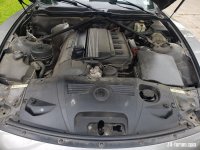
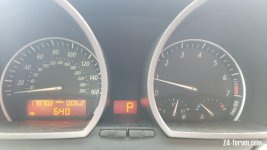
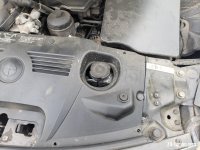
My car just overheated and I have steam coming from here and making noise. It's has oil. The temperature guage went to red and beeped at me. I immediately pulled off the road and turned the car off.

I was driving aggressively for a minute or two. I guess it just couldn't cool down fast enough? I'm letting it cool down atm.

Now check the radiator fluid? I'll have to check that later tonight when it's cooled down.
20220428_181427.jpg
 

Attachments

  • 20220428_181209.jpg
    20220428_181209.jpg
    196.5 KB · Views: 583
These engines to tend to run quite hot but it'd never blow coolant out even from very spirited driving unless something was wrong.
You need to check over the whole system, water pump, blocked rad or coolant leak.
 
I mean no disrespect to you Supadupa64 but from your previous post about your suspension problems and this one, and also from the condition of your engine bay in those photos; may I suggest that your car needs some serious attention from a decent garage/technician. I can see that the top plastic radiator panel is only located by two plastic fasteners which are non-original and all the rest are missing. Also the two plastic/rubber screws that wind down and locate the radiator on its top corners are not fully wound down. This means the radiator/fan are free to flop about a little...not good.
It's definitely blown coolant out of the pressure relief cap on the expansion tank which, as Rockhopper says; means something is quite wrong. Get it into a garage pronto ! :thumbsup:
 
But that coolant must have come out somewhere. You still have a problem and it’ll do it again. Hopefully the head gasket survives.
 
It may be expansion tank and if it has a small crack it may only leak when hot,i would have it checked out.
As said above its strange to lose all your coolamt without having an underlying issue
 
The usual sequence of events leading to a blown head gasket is loss of coolant through a leak, commonly a micro split in the header tank, hose/joint or radiator that isn't picked up until it overheats. Alternatively the mechanical water pump can fail/leak.
Repeated events or a real 'cook' of the head and block will distort and blow the HG.
Once these blocks are cooked the metal properties are altered then extracting and trying to replace head fixings pulls the block apart like cheese.
I would honestly take the comments about getting the cooling system checked out professionally seriously, these cars don't 'just' run out of coolant.
 
Ewazix said:
The usual sequence of events leading to a blown head gasket is loss of coolant through a leak, commonly a micro split in the header tank, hose/joint or radiator that isn't picked up until it overheats. Alternatively the mechanical water pump can fail/leak.
Repeated events or a real 'cook' of the head and block will distort and blow the HG.
Once these blocks are cooked the metal properties are altered then extracting and trying to replace head fixings pulls the block apart like cheese.
I would honestly take the comments about getting the cooling system checked out professionally seriously, these cars don't 'just' run out of coolant.

Totally agree. Saying that from experience. :|

Wasted money replaceing radiator, expantion tank, thermostate, the real damaged had already been done :x
Please take the advise given above :wink:
 
New radiator, thermostat, fan. There was a leak in the radiator. It was basically falling a part. I'm guessing when I was trying my 0-60 tests earlier that day, the radiator started to throw in the towel.
 
supadupa64 said:
New radiator, thermostat, fan. There was a leak in the radiator. It was basically falling a part. I'm guessing when I was trying my 0-60 tests earlier that day, the radiator started to throw in the towel.
Excellent. Word of warning: for the next month or two keep a very close eye an the other components that weren't changed, specifically the water pump and the expansion tank. It is a sad fact with old cars that if you fit a new component it tends to transfer the stress to an older one, which can soon surrender. The expansion tanks develop hairline cracks that can't be seen when cold. As they get hot the coolant escapes, but as it comes out in a fine mist and hits a hot engine there is often very little evidence. Just need to keep an eye on the levels.
The water pump is simpler. If the bearing fails, the seal around it lets water by. This would have no way out and you may not know until it all seizes up. So a tell-tale hole is designed on the bottom of the pump, just behind the pulley. This lets the water drip out to let you know its fubar.
When running, the water hits the belts and spreads all over, making it hard to diagnose. If you turn the engine off, then look at the bottom of the pump you'll see drips forming there.
 
Back
Top Bottom