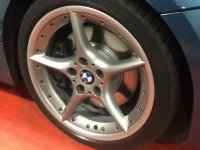
brake woes2

road warrior

Senior member
 Burton On trent
I have ordered a caliper for my driver front, but.. I wondering now, having stated the brake problems go away after spraying copper grease onto the assembly I used a temperature laser on both fronts after a run and discovered my left front was warmer :o
So It seems both get warm, or binding to lessor degrees. I'm now dubious that copper grease would affect a binding caliper so what issues do I have? What about the carrier bolts? When not "binding" or overheating the brakes work fine and pull up equally.
 
The only real way to find out is to take the wheel and start stripping down the brakes, as you are removing the caliper check how tight the pads are in the carrier, check how easy the piston pushes back into the caliper and with the pads removed check if the caliper moves easily on the sliders.
That would rule a lot of things out.
 
It's almost always the piston sticking in the caliper bores. The refurb solution (which is rarely worth the time and effort) is to strip them, pop the bores out with hydraulic action or compressed air and inspect the bores and seals. Almost certainly will need new seals and bore cleanup from any rust traces as a minimum. Buying a refurbed set is just as good as new imho and you get a good cost saving.
 
Don’t use copper grease on rubber seals, it makes them expand. Silicon grease is best for rubber.
(Sorry, don’t want to teach you to suck eggs, but it’s something I learnt recently)
 
I always clean the sliding pins/bolts with wet and dry, and apply silicone grease. Although the rubber boots should be new with the Caliper so doubt the problem is there.
 
dhobbs said:
Don’t use copper grease on rubber seals, it makes them expand. Silicon grease is best for rubber.
(Sorry, don’t want to teach you to suck eggs, but it’s something I learnt recently)
thanks - but im not sure silicon grease will withstand heat and just simply heat up and disperse
 
To be honest I’m concerned about that too. Not sure what temperatures the brake operate at. I’ll check with my grease tonight to see if has a rating.

Got to replace my rear callipers at some point as I believe they’re sticking too.
 
Silicone grease melting point is around 200’C...no way that will be an issue on your calipers. It’s not like vaseline!
 
When I overhauled my brakes a couple of years ago I went with refurbished calipers, I was surprised to read on TIS that you are NOT supposed to use any grease or lubricant on the slide pins,. They have a chromed finish and are best replaced once grotty or pitted, mine were 'dull' even after buffing up so I replaced them.

I appreciate that lots of people do lube the pins and there will be deluge of comments to the contrary but that is the official BMW procedure. I guess it's because grease of any kind attracts dirt and eventually gums up the pins.
 
ph001 said:
Silicone grease melting point is around 200’C...no way that will be an issue on your calipers. It’s not like vaseline!

Came here to say this ^^^ I've always used silicone grease on my sliders, rebuilt a set of rear calipers 8 years ago and recently had to replace the pads (drift car so not everyday use but hard use) and the grease was still intact and sliders rot free. I cleaned the pins and boots and replaced with new silicone grease anyway as I like to be thorough.

You can also buy high temp silicone grease which goes to about 300 iirc.
 
all very good information and im learning .. up until now (something) is seizing i have not used any grease of any kind and was only used now as a get you home situation, as stated something seized 7 months go, then went away till last week
 
I did this on my ole 3.0

https://z4-forum.com/forum/viewtopic.php?f=24&t=8399

I can only say from personal experience heat disbursement & braking issues will be a thing of the past if you do this...
 

Attachments

  • C4C24D31-A54E-4CCD-9EC4-8579A35785C2.jpeg
    C4C24D31-A54E-4CCD-9EC4-8579A35785C2.jpeg
    233.1 KB · Views: 649
Back
Top Bottom