
You are using an out of date browser. It may not display this or other websites correctly.
You should upgrade or use an alternative browser.
You should upgrade or use an alternative browser.
Best rod bearing video I have seen to date
- Thread starter PDJ
- Start date

 North West Surrey
So, I can understand that if you know nothing about bmw specs that this looks like a good video, but 'showing something' doesnt make something a good video, especially if there are some pretty big factual mistakes made by the mechanic if you compare them with the official bmw procedures.
Needless to say that the bmw specced procedure is more complicated and more work.
So quite a few factual errors in that video, not only related to the work but also to what the mechanic thinks how things work...
- 1st error: the mechanic thinks the base material of the bearings is a copper base (2.40). It is not. It's steel. Copper is just another layer.
- 2nd error: 5:00 the mechanic says the clearances on the rodbearings are very tight, more than on 'normal engines'....S54: 0.030-0.070mm M54: 0.020-0.055mm (the s54 clearance is way bigger...)
- 3rd error: When fitting new rodbearings, the bmw workshop manual states that bearing tolerance should be checked with plastigauge.
The mechanic totally skips this part!
Plastigauging is done to ensure that the fitted bearings have a bearing play specced to that 0.030-0.070mm tolerance. Both a too tight and a too loose tolerance are not good: the thickness of the oil is matched to these tolerances. Skipping this step gives you no certainty that the bearings are fitted within spec. Bearings could be faulty from factory, but also there could be dirt between bearings and rodpieces. He tries to work clean, which is indeed important but it doesn't give you certainty. To me not doing this is cutting corners (plastigauging all bearings takes time). If he was really meticulously, or if this was an unknown damage, he'd plastigauge both the old bearings (with the old bolts) and the new bearings, and measuring the crankdiamteres to give a complete picture of what was happening inside of the engine.
- 4th error: the bmw workshop manual states that before final fitting the bearings, both bearings and cranksurface should be well lubricated with oil.
The cranksurface: he doesn't oil at all, the bearing surface, he only half lubes it up with oil...No idea why someone would think that's a good idea.
It's general best practice that all moving surfaces are completely oiled before fitting. Any mechanic should know this.
For torqueing the rodbolts, he uses the ARP specs as he uses ARP bolts instead of BMW bolts. But I have some serious doubts about these.
ARP advices to use a stretch gauge, which is a good method. The stretch tension on rodbolts is important. But they also spec that if you don't have a stretch gauge (basically a micrometer that fits around the bolt, and you measure the unstretched bolt and when torquing you're measuring how long the bolt gets, to a certain spec) you can use a torque wrench with just 50ft-lbs (67Nm) in this case.
I think the bmw method is more accurate. One can say that at the 2nd torque in that procedure (30Nm), the bolt starts to stretch.
The 105deg is the part where it stretches to a certain fixed value (with torquing to a certain # Nm you don;t have that fixed value, it is dependant on the friction of the threads). I can imagine that using different bolts (different material?) the stretching value is different.
If you calculate ARP's setting of 0.065-0.070" of stretch to a rotational torque it would be around 60 deg (if the threads dont deform).
Interesting thing is that for the m54, s52, n62 and a whole lot of other bmw engines, that number is 70deg.
I also think it's strange for a professional shop, specializing in tuning and BMW's that they dont have a rodbolt stretch gauge, as it's a cheap tool that can be had in the USA from as low as 50 quid. (the bolts themselves are even more than twice that....)
So imho this guy ignores a number of bmw workshop specs. Making a video about it doesnt make it a good repair. What makes something a good repair is actually following specs, knowing what to do and knowing what not to do. And these specs are all over the internet, so it's not a big secret or so.
So imho this video is pretty slopppy with a mechanic/shop cutting corners.
Needless to say that the bmw specced procedure is more complicated and more work.
So quite a few factual errors in that video, not only related to the work but also to what the mechanic thinks how things work...
- 1st error: the mechanic thinks the base material of the bearings is a copper base (2.40). It is not. It's steel. Copper is just another layer.
- 2nd error: 5:00 the mechanic says the clearances on the rodbearings are very tight, more than on 'normal engines'....S54: 0.030-0.070mm M54: 0.020-0.055mm (the s54 clearance is way bigger...)
- 3rd error: When fitting new rodbearings, the bmw workshop manual states that bearing tolerance should be checked with plastigauge.
The mechanic totally skips this part!
Plastigauging is done to ensure that the fitted bearings have a bearing play specced to that 0.030-0.070mm tolerance. Both a too tight and a too loose tolerance are not good: the thickness of the oil is matched to these tolerances. Skipping this step gives you no certainty that the bearings are fitted within spec. Bearings could be faulty from factory, but also there could be dirt between bearings and rodpieces. He tries to work clean, which is indeed important but it doesn't give you certainty. To me not doing this is cutting corners (plastigauging all bearings takes time). If he was really meticulously, or if this was an unknown damage, he'd plastigauge both the old bearings (with the old bolts) and the new bearings, and measuring the crankdiamteres to give a complete picture of what was happening inside of the engine.
- 4th error: the bmw workshop manual states that before final fitting the bearings, both bearings and cranksurface should be well lubricated with oil.
The cranksurface: he doesn't oil at all, the bearing surface, he only half lubes it up with oil...No idea why someone would think that's a good idea.
It's general best practice that all moving surfaces are completely oiled before fitting. Any mechanic should know this.
For torqueing the rodbolts, he uses the ARP specs as he uses ARP bolts instead of BMW bolts. But I have some serious doubts about these.
ARP advices to use a stretch gauge, which is a good method. The stretch tension on rodbolts is important. But they also spec that if you don't have a stretch gauge (basically a micrometer that fits around the bolt, and you measure the unstretched bolt and when torquing you're measuring how long the bolt gets, to a certain spec) you can use a torque wrench with just 50ft-lbs (67Nm) in this case.
I think the bmw method is more accurate. One can say that at the 2nd torque in that procedure (30Nm), the bolt starts to stretch.
The 105deg is the part where it stretches to a certain fixed value (with torquing to a certain # Nm you don;t have that fixed value, it is dependant on the friction of the threads). I can imagine that using different bolts (different material?) the stretching value is different.
If you calculate ARP's setting of 0.065-0.070" of stretch to a rotational torque it would be around 60 deg (if the threads dont deform).
Interesting thing is that for the m54, s52, n62 and a whole lot of other bmw engines, that number is 70deg.
I also think it's strange for a professional shop, specializing in tuning and BMW's that they dont have a rodbolt stretch gauge, as it's a cheap tool that can be had in the USA from as low as 50 quid. (the bolts themselves are even more than twice that....)
So imho this guy ignores a number of bmw workshop specs. Making a video about it doesnt make it a good repair. What makes something a good repair is actually following specs, knowing what to do and knowing what not to do. And these specs are all over the internet, so it's not a big secret or so.
So imho this video is pretty slopppy with a mechanic/shop cutting corners.

GuidoK said:So, I can understand that if you know nothing about bmw specs that this looks like a good video, but 'showing something' doesnt make something a good video, especially if there are some pretty big factual mistakes made by the mechanic if you compare them with the official bmw procedures.
Needless to say that the bmw specced procedure is more complicated and more work.
So quite a few factual errors in that video, not only related to the work but also to what the mechanic thinks how things work...
- 1st error: the mechanic thinks the base material of the bearings is a copper base (2.40). It is not. It's steel. Copper is just another layer.
- 2nd error: 5:00 the mechanic says the clearances on the rodbearings are very tight, more than on 'normal engines'....S54: 0.030-0.070mm M54: 0.020-0.055mm (the s54 clearance is way bigger...)
- 3rd error: When fitting new rodbearings, the bmw workshop manual states that bearing tolerance should be checked with plastigauge.
The mechanic totally skips this part!
Plastigauging is done to ensure that the fitted bearings have a bearing play specced to that 0.030-0.070mm tolerance. Both a too tight and a too loose tolerance are not good: the thickness of the oil is matched to these tolerances. Skipping this step gives you no certainty that the bearings are fitted within spec. Bearings could be faulty from factory, but also there could be dirt between bearings and rodpieces. He tries to work clean, which is indeed important but it doesn't give you certainty. To me not doing this is cutting corners (plastigauging all bearings takes time). If he was really meticulously, or if this was an unknown damage, he'd plastigauge both the old bearings (with the old bolts) and the new bearings, and measuring the crankdiamteres to give a complete picture of what was happening inside of the engine.
- 4th error: the bmw workshop manual states that before final fitting the bearings, both bearings and cranksurface should be well lubricated with oil.
The cranksurface: he doesn't oil at all, the bearing surface, he only half lubes it up with oil...No idea why someone would think that's a good idea.
It's general best practice that all moving surfaces are completely oiled before fitting. Any mechanic should know this.
For torqueing the rodbolts, he uses the ARP specs as he uses ARP bolts instead of BMW bolts. But I have some serious doubts about these.
ARP advices to use a stretch gauge, which is a good method. The stretch tension on rodbolts is important. But they also spec that if you don't have a stretch gauge (basically a micrometer that fits around the bolt, and you measure the unstretched bolt and when torquing you're measuring how long the bolt gets, to a certain spec) you can use a torque wrench with just 50ft-lbs (67Nm) in this case.
I think the bmw method is more accurate. One can say that at the 2nd torque in that procedure (30Nm), the bolt starts to stretch.
The 105deg is the part where it stretches to a certain fixed value (with torquing to a certain # Nm you don;t have that fixed value, it is dependant on the friction of the threads). I can imagine that using different bolts (different material?) the stretching value is different.
If you calculate ARP's setting of 0.065-0.070" of stretch to a rotational torque it would be around 60 deg (if the threads dont deform).
Interesting thing is that for the m54, s52, n62 and a whole lot of other bmw engines, that number is 70deg.
I also think it's strange for a professional shop, specializing in tuning and BMW's that they dont have a rodbolt stretch gauge, as it's a cheap tool that can be had in the USA from as low as 50 quid. (the bolts themselves are even more than twice that....)
So imho this guy ignores a number of bmw workshop specs. Making a video about it doesnt make it a good repair. What makes something a good repair is actually following specs, knowing what to do and knowing what not to do. And these specs are all over the internet, so it's not a big secret or so.
So imho this video is pretty slopppy with a mechanic/shop cutting corners.
I think you're being a bit harsh Guido!? I see you edited your post taking into account the ARP bolts (and their torque specs) rather than the different OE bolts which are of course angled.
points 1&2 imo you're being a bit facetious and doesn't affect his work done
point 4 I agree
Your changed point 5 - I don't really see how you can give an opinion on this of his work, the mechanic is just following the manufacturer procedure for that bolt in that installation. Is the manufacture wrong? Maybe I've no idea, but if I was doing the work on someone else's car I'd torque as specced?
point 3 I've been enjoying this guys bmw videos https://youtu.be/LMDTXlgZeV4?list=PLBcFoVFuPCfiwvcou0h8_Lj8TIyxcwxrc&t=1547, whilst he is not an ex bmw 'mastertech' (I hear that phrase thrown around a lot!) I'd probably prefer him to work on my car. This is on an S85 so perhaps it is different but he kind of says using plastiguage is a bit pointless...?
No doubt you can assassinate this video too

Nice workPDJ said:I can also confirm it is easier with a garage lift, because I did mine with the car on 4 axle stands, but to avoid oil dripping on me I left it to drip between weekends strip, clean and rebuild.
 It's a job I'm contemplating doing myself at some point in the nearish future (it will be the 2nd set in the ownership so will be interesting to see what they look like given how I use the car). Great to have videos like this around to help
I did change my post when I saw they were ARP bolts. But ARP recommends using the stretch method. They give a normal torque spec if you don't have that stretch gauge. So not the preferred method. He chooses the lesser method. Would you want that to happen to you're pride & joy because of not having that tool?TomK said:Your changed point 5 - I don't really see how you can give an opinion on this of his work, the mechanic is just following the manufacturer procedure for that bolt in that installation. Is the manufacture wrong?
We're talking about a professional shop and a £50 tool (half the price of the bolts themselves).
If you look at rodbearingsprocedures etc on other coars, you'd see that fitting bearingcaps with just a single torque spec is not common practice. In fact I wouldn't know a single modern engine that uses such a spec. (of course I don't know them all, but I've never seen it).
It's always 1-3 stage torque and then an angle. That is common practice. Either that or measuring directly the bolt stretch.
That's why I really have my doubts to a single torque spec and if that is the non preferred method, I would certainly use the preferred method, and buy the £50 tool...
True, the plastgauge is not the most precise tool, but there is no other tool you can use. And it is a checkup to see if it's within spec. Not to measure the exact amount of play.This is on an S85 so perhaps it is different but he kind of says using plastiguage is a bit pointless...?
No doubt you can assassinate this video too
So not using it, there is no certainty that either fitting of the shells went ok, or that the shells themselves are within spec.
Is that pointless? I don't think so.
To give an example of my own engine:
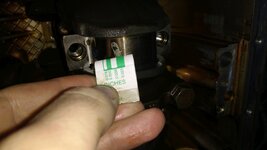
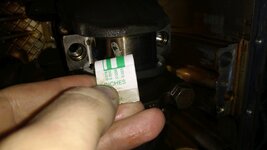
(these were the used bearings btw, but not that that matters, it was a complete mapping/checkup to see wat 30k miles of supercharged driving did to this engine, and there is hardly any data on this, hence this action)
BMW specs that they have to be within 0.020-0.055mm
You can clearly see they are within that, and that there is enough resolution on the scale to determine that (don't mind the word inches, this is the mm scale).
But again: they are not to measure the exact bearing play, they are to be used to see if somethings wrong.
Rodbearings are very critical and I think a good technician should take the time to check if it's within spec. To me: BMW didn't put that in the workshopmanual in vain. And probably it's unnecessary 99% of the times, but it's for that one time that something wasn't right and the engine turns in a pile of scrap within the first few miles. These things happen.
I may be harsh, but these are supposed to be highly trained professionals...
And you have to pay the shop for it.
Unless they don't profile themselves as top of their field. If their slogan is: we're the cheapest, we guarantee it, and if they are, then everything is fine.
Point 1&2 of course don't affect the work done. But hey, its of course purely coincedence that I find that he's skipping points in the workshop manual, has a contradicting point on lubing to BMW and chooses not to use the preferred method to fit things from a tuner.
Selfreflecting I always wonder... am I the only one who sees this?
GuidoK said:But ARP recommends using the stretch method. They give a normal torque spec if you don't have that stretch gauge. So not the preferred method.
We're talking about a professional shop and a £50 tool (half the price of the bolts themselves). Come on, what would you use if you were a 'professional'?
My bad if that's the case, I thought they were just torqued.
Glad that you doGuidoK said:Selfreflecting I always wonder... am I the only one who sees this?
A
Anonymous
Guest
GuidoK said:I did change my post when I saw they were ARP bolts. But ARP recommends using the stretch method. They give a normal torque spec if you don't have that stretch gauge. So not the preferred method. He chooses the lesser method. Would you want that to happen to you're pride & joy because of not having that tool?TomK said:Your changed point 5 - I don't really see how you can give an opinion on this of his work, the mechanic is just following the manufacturer procedure for that bolt in that installation. Is the manufacture wrong?
We're talking about a professional shop and a £50 tool (half the price of the bolts themselves).
If you look at rodbearingsprocedures etc on other coars, you'd see that fitting bearingcaps with just a single torque spec is not common practice. In fact I wouldn't know a single modern engine that uses such a spec. (of course I don't know them all, but I've never seen it).
It's always 1-3 stage torque and then an angle. That is common practice. Either that or measuring directly the bolt stretch.
That's why I really have my doubts to a single torque spec and if that is the non preferred method, I would certainly use the preferred method, and buy the £50 tool...
True, the plastgauge is not the most precise tool, but there is no other tool you can use. And it is a checkup to see if it's within spec. Not to measure the exact amount of play.This is on an S85 so perhaps it is different but he kind of says using plastiguage is a bit pointless...?
No doubt you can assassinate this video too
So not using it, there is no certainty that either fitting of the shells went ok, or that the shells themselves are within spec.
Is that pointless? I don't think so.
To give an example of my own engine:
(these were the used bearings btw, but not that that matters, it was a complete mapping/checkup to see wat 30k miles of supercharged driving did to this engine, and there is hardly any data on this, hence this action)
BMW specs that they have to be within 0.020-0.055mm
You can clearly see they are within that, and that there is enough resolution on the scale to determine that (don't mind the word inches, this is the mm scale).
But again: they are not to measure the exact bearing play, they are to be used to see if somethings wrong.
Rodbearings are very critical and I think a good technician should take the time to check if it's within spec. To me: BMW didn't put that in the workshopmanual in vain. And probably it's unnecessary 99% of the times, but it's for that one time that something wasn't right and the engine turns in a pile of scrap within the first few miles. These things happen.
I may be harsh, but these are supposed to be highly trained professionals...
And you have to pay the shop for it.
Unless they don't profile themselves as top of their field. If their slogan is: we're the cheapest, we guarantee it, and if they are, then everything is fine.
Point 1&2 of course don't affect the work done. But hey, its of course purely coincedence that I find that he's skipping points in the workshop manual, has a contradicting point on lubing to BMW and chooses not to use the preferred method to fit things from a tuner.
Selfreflecting I always wonder... am I the only one who sees this?
Impressed , you could re-build my engines when required

I had not seen this before I replaced mine but asked Mr Vanos and JC Racing and they both gave the same advice and it differs from the video a little, John’s dad (now sadly has passed away) (JC Racing) also added what BMW Motorsport where doing to the motorsport engines that is different to the normal workshop procedure which was interesting, so that was the advice I followed as both these people/company's build engines on a regular basis.
The video does show how much has to come out of the way to do the job. I removed the lot as to give some room under the car on axle stands.
Not in the video but worth changing is the oil pipe from the vanos to the accumulator as the solid pipe can crack/brake and you loose oil
Also not in the video but well worth checking is the condition of the oil pump relief valve (I ended up with an external one) you need to remove the oil pump to get at number one bearing shell anyway.
The video does show how much has to come out of the way to do the job. I removed the lot as to give some room under the car on axle stands.
Not in the video but worth changing is the oil pipe from the vanos to the accumulator as the solid pipe can crack/brake and you loose oil
Also not in the video but well worth checking is the condition of the oil pump relief valve (I ended up with an external one) you need to remove the oil pump to get at number one bearing shell anyway.
Do you know if the one from the s50b30 (also used in the m50 and early m52) is a direct swap? That's still for sale (from a time that the oil pump was serviceable)PDJ said:the condition of the oil pump relief valve
I've seen ones with a special coating for sale in germany at certain tuners, but I'm not sure where they source the base parts from.
And what do you mean with "ended up with an external one"?
GuidoK said:Do you know if the one from the s50b30 (also used in the m50 and early m52) is a direct swap? That's still for sale (from a time that the oil pump was serviceable)
I've seen ones with a special coating for sale in germany at certain tuners, but I'm not sure where they source the base parts from.
Don’t know but a call to Mr Vanos or John at JC Racing should answer that one for you
GuidoK said:And what do you mean with "ended up with an external one"?
Blanked it off in the pump and fitted external pipe work to an adjustable one as well as fitting an oil pressure guage
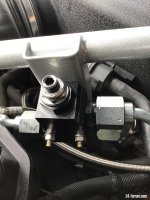
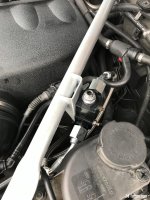
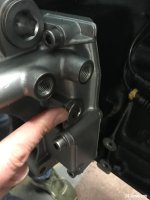
Ah I see. That is indeed a good point to put a regulator valve.
That one you're pointing at is in front of both the oil filter, thermostat and outlets to ancileries I believe.
I've sometimes wondered to what extend the wear on the oil regulator piston in the oil pump is related to the rodbearing wear.
Wear on that regulator piston means it's constantly fluttering. What if that creates constant tremors in the pressure or micro bubbles in the oil?
I don't know exactly how the oil feed goes to the crank. Does it go through the filter and cooler first or is that part direct from the pump?
There are a few channels coming up from the sump/oilpump.
That one you're pointing at is in front of both the oil filter, thermostat and outlets to ancileries I believe.
I've sometimes wondered to what extend the wear on the oil regulator piston in the oil pump is related to the rodbearing wear.
Wear on that regulator piston means it's constantly fluttering. What if that creates constant tremors in the pressure or micro bubbles in the oil?
I don't know exactly how the oil feed goes to the crank. Does it go through the filter and cooler first or is that part direct from the pump?
There are a few channels coming up from the sump/oilpump.
Anyone got a picture showing the pipe from vanos to accumulator please? I wondering if mine is leaking. I have slight bit of oil running down behind the pulleys under the vanos. I have read that a 13mm tensioner bolt does come loose however you cant get to it unless you undid and moved the coolant chamber part to the right of the vanos.
My cars going in on 28th April to have road bearings done. Alot of money for no visual difference but it Is nice for peace of mind i suppose.
My cars going in on 28th April to have road bearings done. Alot of money for no visual difference but it Is nice for peace of mind i suppose.

MichaelK said:Anyone got a picture showing the pipe from vanos to accumulator please? I wondering if mine is leaking. I have slight bit of oil running down behind the pulleys under the vanos. I have read that a 13mm tensioner bolt does come loose however you cant get to it unless you undid and moved the coolant chamber part to the right of the vanos.
My cars going in on 28th April to have road bearings done. Alot of money for no visual difference but it Is nice for peace of mind i suppose.
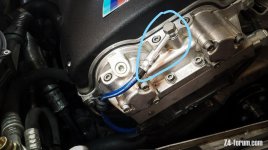
It's the pipe with the blue line coming off it circled in the pic. Only yours will just be a solid black pipe if standard. To be honest, you can get braided hoses and various 'solutions' from a number of places....is it necessary...well if it fails it'll make a mess, but there's very few documented failures of the standard line (pretty sure you'll find none on this forum). I believe BMW also installed an extra support for the line on later engines (like ours) to help the issue. Not to say it can't happen....but you know, where do you draw the line on replacing stuff (ie. how deep are your pockets?). If you are well north of 100k mileage or track it a lot then yes maybe. Personally I would put it in the cosmetic mod bracket rather than a necessary replacement but that's just my opinion. I considered it then decided there's much more important places / likely failure points to put money into first. Then again if you've got £60 odd burning a hole in your pocket it won't hurt.
Just a side note, if your worried about anything VANOS related, take the time to get a Diag cable and either ISTA / DIS software and you can run tests on the VANOS amongst other things. Very useful for a pretty small outlay (if you already have a laptop). Digressing into another topic completely there but yes do some research on it, loads of topics out there.
I would say your oil leak will be from the Vanos gasket (you'd know if the accumulator pipe was leaking), pretty common, probably just needs replacing...or wasn't fitted properly when it was replaced last or just some old oil spillage from when / if it's been taken off before. Possibly even the crush washer on the timing chain tensioner in that area is weeping a bit or not fully nipped up. A small amount of oil can look a lot worse than it is. Good start would be to wipe down the oil residue already there and see if it starts gathering again it'll be easier to pinpoint. Not sure what tensioner bolt your referring to.
Think of the rod bearings as you now know what's there and you can push the engine up the revs without worrying if the bearings are on their last legs and grenading the engine. Makes it a bit more palatable
Looking back rod bearings was one of the best things I did to mine, and I was in the sceptical camp for quite a while whether it was worth it or not but no point having a visually nice car if your worried about what's happening in the engine every time you push it. It was always in the back of my mind pre having it done, spoils the fun (and the point of the engine!) when you start changing gear at 7k rpm 'just in case'.You can change the rod bearings as many times as you like but without checking the oil pump and relief valve you could be wasting your time and money
It least fit an oil pressure gauge
On start up these engines with 10/60w produce far to much oil pressure so this in part is where the warm the engine up comes from
At the weekend I will try and remember and make a video of the start up and warm up times, pressures and tempretures
It least fit an oil pressure gauge
On start up these engines with 10/60w produce far to much oil pressure so this in part is where the warm the engine up comes from
At the weekend I will try and remember and make a video of the start up and warm up times, pressures and tempretures
PDJ said:You can change the rod bearings as many times as you like but without checking the oil pump and relief valve you could be wasting your time and money
It least fit an oil pressure gauge
On start up these engines with 10/60w produce far to much oil pressure so this in part is where the warm the engine up comes from
At the weekend I will try and remember and make a video of the start up and warm up times, pressures and tempretures
Would imagine most indy's doing the job will give the oil pump a once over as it's out during the job anyway. Fitting an oil pressure gauge is a good idea but lets be honest a lot of people aren't going to want to cut a hole in their OE interior to fit a gauge or delete their air vents to do so. Track car, different story of course. Would like to do it on mine though discreetly, something to look into...
Interesting to see in the future as mileage goes up if there are more oil pump failures as there aren't many documented one's so far, certainly not enough to be too worried about it IMO.
It's not an oil pump failure, its the regulator piston wearing.AndyBeech said:Interesting to see in the future as mileage goes up if there are more oil pump failures as there aren't many documented one's so far, certainly not enough to be too worried about it IMO.
And it's a common phenomenon. Most indies don't look at this as they don't know, its mainly a problem known in the german community (they are as usual way ahead of the rest of the world).
Search the german forums for lots of well documented cases.
It looks like this:
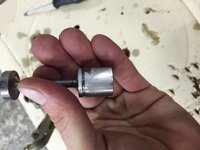
As for what kind of potential consequential damage the worn piston has one can only guess. But that's the case with lots of things found in engines.
Anything to prevent that spun bearing breaking the conrod and punching a hole in the block right :wink:
I know that they make DLC coated ones in Germany specifically for the s50/s54. BMW doesnt sell this part seperately for the s54. For the m54 it's no problem (15quid part) but I think that one's different.
Thats sort of what mine looked like the pump was like new, but as it is all one part number the choice is new pump or blank it off and fit an external one.
Simon Thorpe ran a customer race engine for 20 mins on a test day and it went bang the piston had stuck giving no oil pressure, so it just by passed the engine and returned to the sump.
All his race engines now have an external relief valve and an oil pressure gauge.
Simon Thorpe ran a customer race engine for 20 mins on a test day and it went bang the piston had stuck giving no oil pressure, so it just by passed the engine and returned to the sump.
All his race engines now have an external relief valve and an oil pressure gauge.
GuidoK said:Fitting an oil pressure gauge is a good idea but lets be honest a lot of people aren't going to want to cut a hole in their OE interior to fit a gauge or delete their air vents to do so.
I would rather loose an air vent than my engine
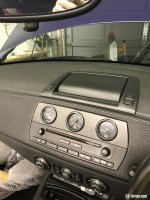
I kept the original centre vent so it could be re fitted if required, just blanked the vent off inside the dash.