
You are using an out of date browser. It may not display this or other websites correctly.
You should upgrade or use an alternative browser.
You should upgrade or use an alternative browser.
Atacama Yellow 35is build thread
- Thread starter B21
- Start date

 Scottish Borders
Embarrassing to fail in the first place..congrats on the PASS
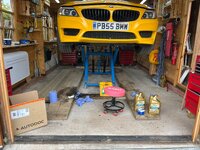
There’s something vaguely spiritual about a decent oil change…
The laying of hands on the oil filter..MAHLE
The anointment of the engine with the finest oil RAVENOL RUP 5w-40
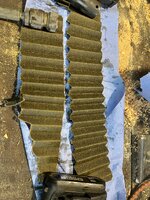
The inspection of the oil filter.
The sample sent to someone divine …Finning
The torquing of the drain / filter housing with a digital torque wrench…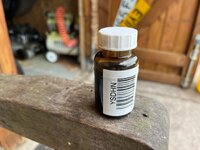
The laying of hands on the oil filter..MAHLE
The anointment of the engine with the finest oil RAVENOL RUP 5w-40
The inspection of the oil filter.
The sample sent to someone divine …Finning
The torquing of the drain / filter housing with a digital torque wrench…
Looking to keep this engine running past 250k miles..hence my focus…lol I think your thinking about this a tad bit too hard. ;D but nice job changing the oil. What lift is that? Easy jack?
The scissor lift is a no name Chinese version that retails here for around £1,700..great ..but..useless if you you want to work on the exhaust / prop shaft / gearbox ..should have paid a bit more for a drive over version..
Öhlins damper settings corrected — and an accidental experiment
To err is human. To err on all four corners simultaneously, and then not notice for several weeks, is the mark of a muppet — but as it turns out, an instructive one.
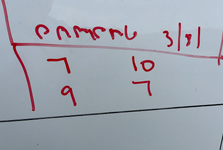
When I set the Road & Track dampers after the spring rate change, I did it in the garage in stages. What ended up on the car was 9/7 front and 7/9 rear — counting clicks out from full hard, so lower is firmer. Nothing matched side to side on either axle, and one corner was still sitting on the number that suited the old Öhlins spring rates rather than the new ones. Quite why or how I got there I'm not sure. These things happen, especially if you get distracted or stop-start a job — the "now what was I doing" moment, or worse, just plain forgetting. Heh ho.
I then drove it for several weeks and concluded the car rode better than at any point in six years of ownership.
The changes have come in overlapping windows:
- Tyres. Continental SportContact 7s, 235/40 R19 front and 275/35 R19 rear, up from 235/35 and 275/30. That's about 12mm more sidewall at the front and 14mm at the rear. For context, the factory 225/35 and 255/30 run-flats left roughly 76–79mm of sidewall, which is below the point at which a tyre can envelop a sharp edge rather than transmit it.
- Springs. Up from Öhlins' stock 60/70 N/mm to 80/96 N/mm. At unchanged perch positions that recovers a calculated 12 to 16mm of bump travel — the car had been riding too close to the stops. Happy to show the working if anyone wants it.
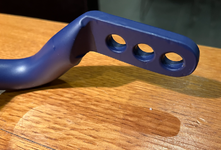
- Rear anti-roll bar. H&R, maximum setting.
- Damping. Which I then got wrong.
Like so many parts of this journey, I didn't end up where I thought I was going to be. There's no way of telling which of those changes did what — they overlap too much. A car with four dampers set wrong, one of them by a full generation of setup, still felt transformed. Whatever fixed the six-year harshness problem, it wasn't the clicks. It was sidewall and bump travel. Six years of harshness was a system-matching failure, not a single bad component.
On the tyre itself: the SC7 is where I've ended up after a good deal of switching about, and the reasons are boring and mechanical rather than tribal. Wet composure, and a sidewall that loads predictably rather than going vague and then sharp. A tyre with a soft, unresolved carcass would have wasted most of what the size change bought. Pressures 34 psi all round.
The clicks are still worth getting right. Corrected to 7/7 front and 5/5 rear — a step firmer at both ends and more at the rear, which is where the load is going. The Öhlins R&T runs a single adjuster and it's rebound-dominant, so firming it buys body control without spending much of the compliance the sidewall change just paid for. That's the theory, anyway.
The test is four days in the Dales with a passenger and a full boot. Rear-biased car, meaningful added rear load, and a genuine spread of surface from decent A-road to the sort of patched, cambered stuff that finds every fault. If the rear is over-damped I'll know within an hour and it's a two-minute job to back it off in a lay-by. The fronts stay put unless compression becomes properly objectionable — the front right collar is still seized pending the winter overhaul, so that corner is my fixed datum and I'd rather not disturb the one thing I can't currently reverse.
B21
Elite
ua Scottish Borders
A moment ago
New
Add bookmark
#1,367
I was getting more and more annoyed with the sticky greasy feel of the main volume knob on the idrive and there was a stickiness to part of my beloved Royal steering wheel remover with Audi-esque bottom chop.
God only knows what human based deposits had accumulated on that little knob over time..I plead guilty to mayo and other food based contaminants on the steering wheel.
Conventional cleaning products seems to barely touch the issue.
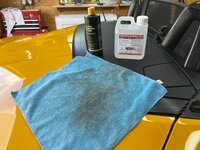
Concerned about using more powerful astringent solvents I alighted on iso propyl alcohol.
This is strong enough to to remove the grease / organic matter but not damaging to either the leather or plastics.
It took several applications with a fibre cloth to fully remove the stickiness…about 9-10 applications…
Did the gear lever / gaiter which was Royal modified too..
Then used some gentle leather food to finish it off..nice result…
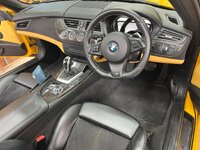
Carried on around the cabin with the leather good..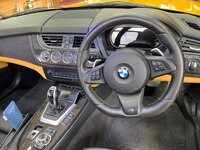
Elite
ua Scottish Borders
A moment ago
New
Add bookmark
#1,367
I was getting more and more annoyed with the sticky greasy feel of the main volume knob on the idrive and there was a stickiness to part of my beloved Royal steering wheel remover with Audi-esque bottom chop.
God only knows what human based deposits had accumulated on that little knob over time..I plead guilty to mayo and other food based contaminants on the steering wheel.
Conventional cleaning products seems to barely touch the issue.
Concerned about using more powerful astringent solvents I alighted on iso propyl alcohol.
This is strong enough to to remove the grease / organic matter but not damaging to either the leather or plastics.
It took several applications with a fibre cloth to fully remove the stickiness…about 9-10 applications…
Did the gear lever / gaiter which was Royal modified too..
Then used some gentle leather food to finish it off..nice result…
Carried on around the cabin with the leather good..
Debugging the dynamics of the E89’s handling once you’ve changed over 22 related variables is complex..most of it has been done empirically…but for my book series the position of ‘I just fiddled and it seems to work’ feels a little coarse..so today i decided to go for some facts…
So the eternal question of what is the E89 rear suspension motion ratio has now been answered…
In almost all car suspension systems the spring rate of the front and rear springs do not equate to the spring rate that the you feel and the wheel sees…
With a coil over front it’s close but the angle of the strut means it’s not quite 1..on the rear on an E89 or E85 the spring is way inboard of the hub.
The E85 motion ratio..has been documented ..and I used this rate for my basic suspension calculations ..however it didn’t seem quite correct..do today…I did the full measurement…how much does the wheel travel relative to how much does the spring move…and we have the results…
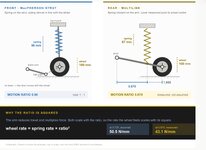
A nice diagram explains this…
Once you have both the spring rate of the spring AND the motion ratio you can work out the effective spring rate and the ride frequency front and rear…
I’ll leave it there for now…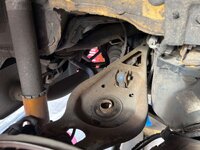
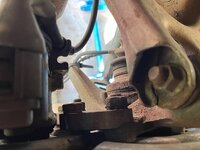
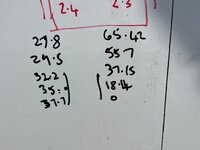
So the eternal question of what is the E89 rear suspension motion ratio has now been answered…
In almost all car suspension systems the spring rate of the front and rear springs do not equate to the spring rate that the you feel and the wheel sees…
With a coil over front it’s close but the angle of the strut means it’s not quite 1..on the rear on an E89 or E85 the spring is way inboard of the hub.
The E85 motion ratio..has been documented ..and I used this rate for my basic suspension calculations ..however it didn’t seem quite correct..do today…I did the full measurement…how much does the wheel travel relative to how much does the spring move…and we have the results…
A nice diagram explains this…
Once you have both the spring rate of the spring AND the motion ratio you can work out the effective spring rate and the ride frequency front and rear…
I’ll leave it there for now…
Only because I fitted uprated 80nm/96nm springs ..on 60nm/70nm was sitting pretty low or ran out of spring travel…never understood lowered cars ..well if you drive in Scotland..The range of height adjustability on those rear Ohlins is impressive.


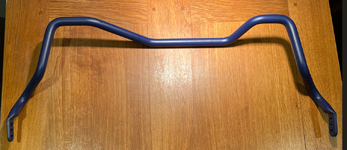
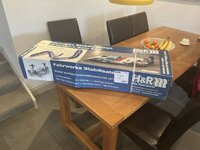

 Ohio
Ohio
