Avityesboy
Member
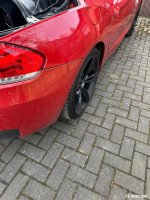
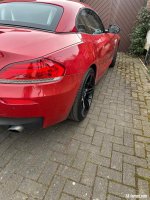
Next job was these 15mm rear spacers. Perfect now on the back.
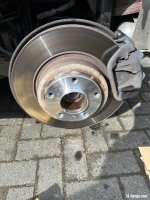

Big Andra said:Get those brake discs tidied up

Big Andra said:Take it easy, your health is your wealth
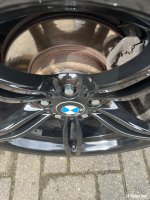
, just wanted to see how she sat as was bugging me, pleased with the result, bonus was the new shiny wheel nuts they looked nice…

BMWZ4MC said:If you decide to fit 5mm spacers, put a little copper slip on the back faces. Occasionally, they can be a real bugger to remove and they're such low profile there isn't much to get hold of. Mine decided to become intimately related to the disc bells after a particularly hard track day and required a mallet and an old screwdriver to separate them.


BMWZ4MC said:If you decide to fit 5mm spacers, put a little copper slip on the back faces. Occasionally, they can be a real bugger to remove and they're such low profile there isn't much to get hold of. Mine decided to become intimately related to the disc bells after a particularly hard track day and required a mallet and an old screwdriver to separate them.


Got to ask, are the new wheels for your kit car the same size and offsets as the originals?Pondrew said:You should never use copper slip (grease) on mating faces. The clue is in the name. It slips!
Spacers (which I am not a fan of as they change the geometry of the suspension exponentially, but that isn't important) are usually made of aluminium. Discs hubs are made of steel. Those two metals don't like each other and create a chemical reaction called 'galvanising', which is a chemical form of welding. So they essentially weld themselves together.
So people use grease to form a barrier between the two metals to prevent the galvanising. The grease then allows the metals to move, putting great strain on other parts, mostly the wheels bolts.
Just saying.

That is a good point, which I have been thinking about TBH.Nictrix said:Got to ask, are the new wheels for your kit car the same size and offsets as the originals?Pondrew said:You should never use copper slip (grease) on mating faces. The clue is in the name. It slips!
Spacers (which I am not a fan of as they change the geometry of the suspension exponentially, but that isn't important) are usually made of aluminium. Discs hubs are made of steel. Those two metals don't like each other and create a chemical reaction called 'galvanising', which is a chemical form of welding. So they essentially weld themselves together.
So people use grease to form a barrier between the two metals to prevent the galvanising. The grease then allows the metals to move, putting great strain on other parts, mostly the wheels bolts.
Just saying.
Surely if they aren't it's just the same as adding spacers.
I get that and don't think you are wrong on a practical level. However, in theory, if you put a liquid barrier between any two surfaces which should be clamped together, they can move.BMWZ4MC said:There was no evidence of galvanic corrosion in my case (there was no transfer of material once the spacers were removed nor corrosion of the mating faces), they were simply jammed on the hub. The problem seems peculiar to 5mm spacers since I've never encountered it with 10mm, 12mm, 15mm or 20mm spacers on a variety of cars.
The use of copper slip has been much discussed and there are lots of opinions, but very little evidence has ever been offered*
Show me the lab-based or real-life study where there is a demonstrable difference in slip between spacer and hub with and without a smear of copper slip. Then show me the evidence that any slip has a material effect on the loads borne by the wheel bolts. Lastly, show me that the resultant increased stress will ultimately exceed the endurance limit of the bolts and lead to their failure.
Anecdotal evidence is worth little, but my spacers are now easily removed with out a mallet and a makeshift chisel. Furthermore, my car has seen enormous loads at the limit of grip on soft compound semi-slick tyres over many hours of track use and I've never had a wheel fall off
*my opinion is equally lacking the evidence to support it

 South Lanarkshire
 Scottish Borders
 At the summit of the picturesque fens
