
You are using an out of date browser. It may not display this or other websites correctly.
You should upgrade or use an alternative browser.
You should upgrade or use an alternative browser.
Waxoyl-
- Thread starter andysat
- Start date
 just avoid the brakes!
Waxoyl themselves advise to keep it off rubber parts which makes sense as the wax is suspended in a petroleum based mixture to keep it solidified so it could dry any rubber parts out, however reading up on it it doesn't appear to have any long term affects. I've tended to use Dinitrol underbody wax on the Z3 as its less messy etc.
Tim.
Tim.

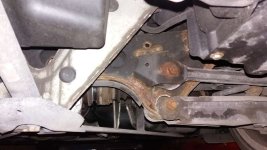
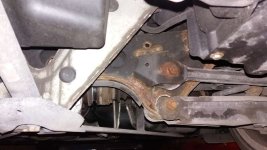
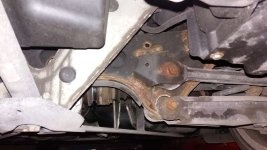
The bolts will probably be fine with some penetrating fluid and even if they did shear off a competent mechanic should be able to replace, if the alignment needs doing then I would go ahead and get it done. I would prefer the bolts shearing and get them replaced but you won't know until attempted.
Tim.
Tim.
I used to use Waxoyl inside chassis box sections on classics which is what it was really best as it's smelly, messy and not good if you get it near exhausts etc, but that ACF50 looks like good stuff, I've not heard of it before but found this write up which seems to confirm it might do a good job as long as it's applied per these instructions. I might get some myself 
From UKmonster.co.uk http://www.ukmonster.co.uk/monster/archive/index.php/t-34134.html
"ACF50 is classed as an Ultra Thin Fluid Film coating. Ultra Thin means it's designed to be 'active' at a coating thickness of two thousands of an inch! At that thickness you literally can't see it other than a sheen. Fluid Film coating means it stays fluid during its application life. Most people assume as it's a liquid you need to see liquid on the metal it's applied to, not so. When too much is applied the surplus simply congeals, road dirt thrown up then embeds in it and it becomes like trying to clean sand out of jelly. As someone said this makes it a bugger to clean off later on, and you risk trapping corrosive particles directly in the ACF50. At the right thickness dirt should easily wash off with water.
When to apply it? ACF50 is primarily a moisture displacement and repellent treatment to prevent corrosion. Moisture doesn't just come in rain form. Washing, condensation, dew, even moisture content in road traffic film and thrown up animal waste all contain moisture. Winter periods have the added element of corrosive road salt, but throughout the year stuff like sulphur traffic fumes, industrial fallout, animal waste and road spray are also corrosive. As the treatment lasts for months, we'd say treat it at anytime and simply top it up as and when necessary.
Application:
Shake the can for a good two minutes. It's a hydrocarbon based product so the heavier elements can settle if it's been stood awhile.
Forget spraying directly from the can onto the bike. There's only 2-3% propellant in the can so it just comes out as a pink froth or a very coarse spray. You'll end up with a mess on the floor. Spray onto a microfiber cloth (these are great because they 'hold' more content than an ordinary cloth). Aim to get the cloth damp, not wet, then wipe onto all the areas you can reach. When finished you can stick the cloth in an airtight bag or container and re-use what’s still left on it several weeks later. For hard to access areas, spray into the lid until you have a little liquid in there then use a brush to dip in the liquid and apply to the bike. A long handled radiator brush is ideal to reach into recessed and awkward areas. Again don't overload the brush. Overall you're looking to apply a 'sheen like' coating.
Don't over fuss about getting it in nooks and crannies. ACF50 'creeps' like mad. Put it on, go and have a cup of tea for an hour. It'll have pretty much worked itself into everywhere.
There's no need to apply to paintwork. It's designed to protect metal, so paintwork benefits more from a decent wax or glaze coating. It won't do any harm but you'll find waxes won't 'bond' as easily or efficiently on top of an ACF50 coating. You can safely apply it to plastics and rubbers, in fact being hydrocarbon based it re-conditions them, (the original 1970's formula used to dissolve latex rubber, don't find much of that on a bike and it's been updated since anyway). Wipe on, allow to stand for a few minutes to be absorbed, then use a clean microfiber to buff off. Leaves a nice sheen and brings the colour back."
From UKmonster.co.uk http://www.ukmonster.co.uk/monster/archive/index.php/t-34134.html
"ACF50 is classed as an Ultra Thin Fluid Film coating. Ultra Thin means it's designed to be 'active' at a coating thickness of two thousands of an inch! At that thickness you literally can't see it other than a sheen. Fluid Film coating means it stays fluid during its application life. Most people assume as it's a liquid you need to see liquid on the metal it's applied to, not so. When too much is applied the surplus simply congeals, road dirt thrown up then embeds in it and it becomes like trying to clean sand out of jelly. As someone said this makes it a bugger to clean off later on, and you risk trapping corrosive particles directly in the ACF50. At the right thickness dirt should easily wash off with water.
When to apply it? ACF50 is primarily a moisture displacement and repellent treatment to prevent corrosion. Moisture doesn't just come in rain form. Washing, condensation, dew, even moisture content in road traffic film and thrown up animal waste all contain moisture. Winter periods have the added element of corrosive road salt, but throughout the year stuff like sulphur traffic fumes, industrial fallout, animal waste and road spray are also corrosive. As the treatment lasts for months, we'd say treat it at anytime and simply top it up as and when necessary.
Application:
Shake the can for a good two minutes. It's a hydrocarbon based product so the heavier elements can settle if it's been stood awhile.
Forget spraying directly from the can onto the bike. There's only 2-3% propellant in the can so it just comes out as a pink froth or a very coarse spray. You'll end up with a mess on the floor. Spray onto a microfiber cloth (these are great because they 'hold' more content than an ordinary cloth). Aim to get the cloth damp, not wet, then wipe onto all the areas you can reach. When finished you can stick the cloth in an airtight bag or container and re-use what’s still left on it several weeks later. For hard to access areas, spray into the lid until you have a little liquid in there then use a brush to dip in the liquid and apply to the bike. A long handled radiator brush is ideal to reach into recessed and awkward areas. Again don't overload the brush. Overall you're looking to apply a 'sheen like' coating.
Don't over fuss about getting it in nooks and crannies. ACF50 'creeps' like mad. Put it on, go and have a cup of tea for an hour. It'll have pretty much worked itself into everywhere.
There's no need to apply to paintwork. It's designed to protect metal, so paintwork benefits more from a decent wax or glaze coating. It won't do any harm but you'll find waxes won't 'bond' as easily or efficiently on top of an ACF50 coating. You can safely apply it to plastics and rubbers, in fact being hydrocarbon based it re-conditions them, (the original 1970's formula used to dissolve latex rubber, don't find much of that on a bike and it's been updated since anyway). Wipe on, allow to stand for a few minutes to be absorbed, then use a clean microfiber to buff off. Leaves a nice sheen and brings the colour back."
ronk said:Not a huge fan of Waxoyl since i demonstrated the product to my father in law .
I took a clean 6" nail - dipped it in a can of Waxoyl then hung the coated nail in a tree - a few months later there was rust showing :thumbsdown:
Humble pie had to be eaten!
Did you not suspect your father in law had swapped the nails?

No - he had forgotten all about it - he had kept an open mind about the stuff until then.
He was "Old School " when it came up underbody rust prevention - old engine oil mixed with paraffin applied every year and any time he had a chance - the car used to stink but were rust free.
He was "Old School " when it came up underbody rust prevention - old engine oil mixed with paraffin applied every year and any time he had a chance - the car used to stink but were rust free.