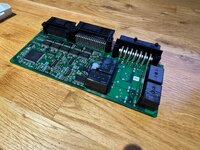
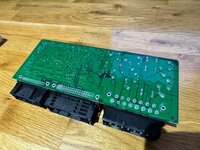
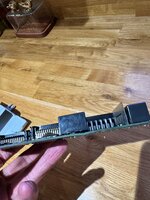
Anybody repairing GM5 star 12 LOW in UK?

wiganz4

Member
Simply put, I replaced my GM5 module with one from Global Parts and although this works fine and as it should - same model/year and crossover part using realoem - I'm wanting to get the original relays replaced. I bought the correct relays contemplating a go but I'd rather someone who regularly does this work sort it. I know there's a few offering GM5 repairs but nobody seems to do the Star12 Low module. Is there a reason, or am I just assuming this?

Cheers
 
I’ve tried

No joy to date as on a 5star the relays come off the board really easy, the 12star are virtually welded to the board

Have a search on eBay as I think some guys do 12star repairs but I have no idea how

I melted the board on the test one I did I got it so hot!! Still wouldn’t budge
 
I’ve tried

No joy to date as on a 5star the relays come off the board really easy, the 12star are virtually welded to the board

Have a search on eBay as I think some guys do 12star repairs but I have no idea how

I melted the board on the test one I did I got it so hot!! Still wouldn’t budge
Makes sense as to why nobody wants to touch them. I have a working unit in so I might try with a mini grinder and drill. I mess about with/collect Sinclair computers and their peripherals so I'm always ruining PCBs! 😀 I have 'dug' chips out many times on old and flimsy boards though in order to save them so I'll give it a go
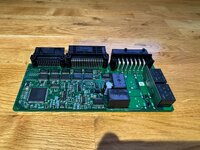
 
If you manage it if got 4 relays you can have

They came from china so took ages
 
I'll let you know how it goes. Mine came from China too, and yeah they took ages as well. So long in fact I'd forgotten about ordering them!
 
Can someone pop a pic of this thing on please? I've never heard of it before! I do a bit of tinkering with electronics so I may be able to offer some advice.
 
I'd be interested too. I can only think the relays are glued down before soldering as the only other thing to keep components from being desoldered is pins that are tight in the holes but they just require judicious levering.
 
The conformal coating looks very thick; far more like varnish than on most PCBs. It doesn't look like its melted through so I wonder if it was preventing heat getting into the joint properly - it might need manually scraping back first.

Several of the relay pins are on very thick planes on the board too. These can absorb a shed load of heat too (as can relay innards or that weird screen/heatsink thing by the end 2) - so it'd need a heavy soldering iron tip or a temperature controlled iron (they have far higher power elements so can replace lost heat quicker.) Plus these will be made with lead-free solder which is an utter bastard to do anything with at the best of times (my 25W toolbox soldering iron usually won't touch it.) The trick here is to melt traditional 60/40 tin/lead solder into the joints first to make them more workable.

(Apologies for any egg sucking lessons, I'm just thinking out loud!)
 
Goes without saying if anyone wants this one to have a play with you are welcome…
 
Mr Morris has said everything I was going to say! A desoldering gun would be a useful tool - maybe preheating the board on a hot plate as well.
They might be glued down but the legs are quite hefty with loads of solder on them so I doubt it’s needed. Some boards use glue though to hold components in place to help during assembly.
 
All the above is why I'm going to attempt my method of machining down the pins first. A lot of stuff I mess about with from the 80s use thick boards, now very brittle, and components were often dabbed with glue then all soldered in one hit with the pcb upside down.
 
Reading this made me feel better about my own efforts. I had failing relays, and I thought I could solder new ones on without previous soldering experience. I bought a decent kit, read about how to do it properly, trained on some old TV remote boards and everything seemed pretty simple. Then, when I got to unsoldering the relay joints on gm5, the buggers wouldn't come off no matter what trick I tried! I spent couple of nights trying, using flux, braid, leaded solder, turning up the heat, etc. I got some joints out, but not all of them. Finally I gave up and took it to a pro. Anyway, this gave me some peace of mind, maybe I didn't suck at soldering so bad, after all :driving:.
 
Last edited:
I think you can also get one from E46 , replace the relay and code it.
The issue will still be the same as they're the same boards and relays, plus no programming needed with a module from an e85. Getting a replacement isn't there issue here, it's swapping the relays out.
 
Thinking about it I've got hot air that'll go up to 450 degrees C, I'm sure that'd do it.
 
Back
Top Bottom