When buying a used E89 - concerns about CAT S/CAT N?

Chanceschmerr

Member
 Bristol, UK
Site Supporter
Hi Everyone,

Apologies for asking a kind of more generic buying-a-car question, but in Canada the designations are a bit different.

I'm looking at a 2011 E89 right now, price is good and decently low mileage (50k Miles). It is listed as CAT S - car had damage to the left front control arm and rim prior to 2022, and the current owner bought in 2022 and had it "professionally repaired".

I'm waiting on the pictures/details of the damage and repairs, but in a case like this, would you as an interested buy be significantly concerned about buying such a car? What specifics would you inspect/check when seeing it in person? Does being a CAT S (or former CAT S, as it were) affect the insurance and MOT, or just the insurance (or nothing, if properly repaired?)

I've never bought a car with previous repaired damage before, so I'm inexperienced in this regard.

Thanks in advance!
 
Bought an E85 that had been a CAT S, it was a steal, great spec and I saw pictures of the damage. The guy we bought it from didnt know it was CAt S until a previous owner saw the advert and contacted him.

What did I learn? found a few issues with it, minor care items really , didnt really bother us. What is worth knowing is that and further claims whilst its in your care will result in a lower value if a total loss again. Unfortunately exactly what happened. vehicle was devalued by about £2,000.

Again didnt bother us, bought it back for peanuts, repaired and upgraded for pennies too with the help of a forum member who has gone on to be a good friend too.

My point is , make sure you know what you are doing & it makes sense, if it doubt walk away. Your market at sale time is massively reduced too, although the sad fact with the e85 in question is its worth much more in parts than as a complete vehicle too.
 
Hi Everyone,

Apologies for asking a kind of more generic buying-a-car question, but in Canada the designations are a bit different.

I'm looking at a 2011 E89 right now, price is good and decently low mileage (50k Miles). It is listed as CAT S - car had damage to the left front control arm and rim prior to 2022, and the current owner bought in 2022 and had it "professionally repaired".

I'm waiting on the pictures/details of the damage and repairs, but in a case like this, would you as an interested buy be significantly concerned about buying such a car? What specifics would you inspect/check when seeing it in person? Does being a CAT S (or former CAT S, as it were) affect the insurance and MOT, or just the insurance (or nothing, if properly repaired?)

I've never bought a car with previous repaired damage before, so I'm inexperienced in this regard.

Thanks in advance!
Personally I would NEVER buy a 'cat' car, especially not a CAT S.
For starters there are no guarantees it has been repaired properly and completely. An MOT is no guarantee. Many people are like me, so the market when selling on is small and the value is significantly less than a non-cat car. In my opinion, a CAT S should be 50% of the value of a non-cat equivalent, but I have seen some very expensive cat cars for sale recently.
The ONLY reason for buying a CAT car is if it is dirt cheap.
Insurance (in the UK) can be a problem, although they are better than used to be, apparently. If you are potentially planning on taking the car back to Canada, it may be wise to check if there are any issues with that with a previously 'written off' car.
 
Personally I would NEVER buy a 'cat' car, especially not a CAT S.
For starters there are no guarantees it has been repaired properly and completely. An MOT is no guarantee. Many people are like me, so the market when selling on is small and the value is significantly less than a non-cat car. In my opinion, a CAT S should be 50% of the value of a non-cat equivalent, but I have seen some very expensive cat cars for sale recently.
The ONLY reason for buying a CAT car is if it is dirt cheap.
Insurance (in the UK) can be a problem, although they are better than used to be, apparently. If you are potentially planning on taking the car back to Canada, it may be wise to check if there are any issues with that with a previously 'written off' car.
Think ours was CAT S as they couldnt get the rear Aero Difuser and the plastic battery box was cracked. I have since has it apart to repair a faulty park sensor and found absolutely nothing wrong or evidence of any structural repair. To put it into context it was CAT S again for a bolt on rear wing. CAT S is thrown around like confetti, do your home work and make sure it works for you. When I say it was cheap, it came with a full Aero and a set of wheels that covered the cost, the car had 40 thousand miles on it, FSH and was basically free. Its insured on agreed value now, the insurance have no issues with its history.
 
Cat S relates to Structural damage, so something like scuttle, crossmember, chassis leg, inner wing, boot floor, etc.
Cat N is for Non-structural damage like a bolted on wing, dented door, bumper cover, etc.

But insurers do seem quite keen on applying Cat S to cars that should only be Cat N.

The problem is if you haven't seen photos of the damage it's very hard to determine how extensive it was. Knowing when it happened also helps, as it doesn't take much damage to make a 10 year old car uneconomic to repair.

Insuring them isn't usually a problem, most insurers are happy if the car passed an MOT test after the repair, but selling them (especially a Cat S) is unless they are dirt cheap!

Personally I'd give a Cat S a miss, unless it was something really unique and priced really low.
 
I think @Chanceschmerr is in a fairly unique position though, with the expressed intention to buy the car then eventually return it to Canada when he goes.
Firstly, I think we would all agree that a properly repaired car is just as structurally sound as the original.
A lot of the Cat S issue comes down to a general lack of understanding of how these repairs may be carried out, probably down to a general lack of engineering knowledge and from reading lots of scaremongering on forums, facebook and the like.
It is true the value will drop but I suspect that is due to the perceived issues (see previous sentence) meaning people want to pay less and consequently the insurance value drops as well.
It is quite apparent that the vast majority of owners on this forum only purchase a car once they have reassured themselves they will get as much of their outlay back as possible. Those who simply want the car for fun and accept it will depreciate in their ownership but don't really care are in the minority.
In this case, the question would be more whether the same perceptions exist in Canada; whether the rules on repaired cars are the same, tougher or more lenient; how insurance companies treat these cars; and of course, whether the OP ever intends to sell it on anyway.
Whilst all the information is supposed to be held on the Insurance Database in the UK, I wonder whether all that info would necessarily have to be transferred to Canada, or whether the classification may even be 'lost' mid-Atlantic.
 
Two things I would consider:

You are taking on additional risk.

It will be a nightmare to sell.

I agree with The Forum Member Formerly Known As Pondrew - I'd want it to be a LOT cheaper to make that risk worthwhile. I've been tempted a few times, but generally they're only 10-20% cheaper and buying used cars carries enough risk as it is.
 
That type of prang is tricky…on the one hand could be as simple as a sacrificial suspension link and wheel…on the other some loads could have done some damage to the steering rack..especially the oh so touchy EPS unit..

I’d expect to see say 30% + off the equivalent cheapest other non S car..imho
 
Pictures and history are everything. This was a Cat S this year! As Martin already said , there is a huge lack of engineering knowledge out there.522ED1C4-4BB8-4D5F-BC96-4EF23E10930D.jpeg
 
Pictures and history are everything. This was a Cat S this year! As Martin already said , there is a huge lack of engineering knowledge out there.
So are you saying that 'expert' loss adjusters don't know what they are talking about?

That may be the case, but unfortunately the general market doesn't agree.
There are a lot of people who buy 'salvage' from auction and spend a few quid repairing them, get an MOT and sell them on for good profits. Those people are doing it on a budget (as small as possible) to maximise their return.
As @tiglon said, there is enough risk in buying non-write offs. That risk is compounded with a CAT car, so why bother just to save a few hundred quid at purchase time?
 
Two things I would consider:

You are taking on additional risk.

It will be a nightmare to sell.
This! Why take that additional risk and financial hit later on, when the savings are minimal?
I can see it is tempting to find a car which, on the face of it, is exactly the same as one £2,000 more but has a CAT marker for "only damage to the left indicator lens, which has been 'professionally repaired to a brilliant standard'".

Buying cars is akin to the Wild West already. Buying CAT cars is akin to the Wild West without a weapon, or a horse. ;)
 
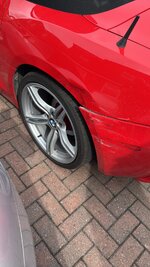
To be fair, I don’t think it’s about engineering knowledge. A loss adjuster has looked at the red car and said new bumper, new wing, plus paint and labour = say, £3k, which is much more than the book value of the car, therefore it’s a write off.

Of course an enterprising DIYer with spannering skills and access to second hand parts can do it for a few hundred quid, but that’s not how insurance works.

I would still avoid a Cat car unless it was very cheap and I planned never to a sell it, because it sure will be hard to sell.
 
So are you saying that 'expert' loss adjusters don't know what they are talking about?
In my recent experience many cars get a Cat marker without ever being looked at by any sort of expert these days.

Back in 2018 my nephew's BMW 325i Touring had some damage to the passenger side front corner. He took some photos on his phone and sent them to his insurer who decided to make it a Cat S based purely on those. There was no structural damage - a new wing and 2nd hand bonnet from Ebay were fitted and painted and he had it back on the road with a few hundred quid left over.

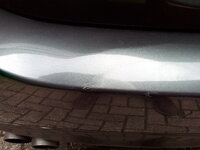
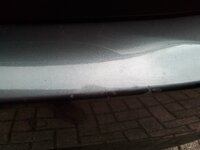
May 2023 my 330i got a tap in the rear. Took it for an estimate at a place recommended by the other insurer and it became a Cat N because the estimate was padded out to include hidden damage, blending paint, etc.

A new bumper cover in primer from BMW would have just cost £650 then it needed painting and fitting. This is what Cat N can look like.


Left Crack 190523.jpg


Right Crack 190523.jpg
 
Of course an enterprising DIYer with spannering skills and access to second hand parts can do it for a few hundred quid, but that’s not how insurance works.
And the vast majority aren't done by 'enthusiasts' who buy their own cars back. They are put back on the road by 'scrap dealers' and back street bodyshops; purely to make money.
 
As I said, this person’s situation is different
It's only different in that he may want to export the car to Canada in the future. None of us know the rules there, so can't comment on that.

The opinions expressed here are based on buying in the UK, which he will be doing. I don't see a 'knee jerk reaction' just differing views on the merits, or otherwise, of insurance write-off cars.

My view is don't go near with a barge pole. Others have different views. The OP can take what he wants from all.
 
I have purchased several cat repaired cars over the years.

My findings on this are if you can see the previous damage and make your mind up from the pictures how badly they were damaged it makes a difference.

For example, I purchased 2 years ago a2019 M4 that was written of when just over 3 months old.
The reason behind it being written off was due to COVID at the time, where parts and labour was hard to put in place to repair.
I have the pictures and it certainly wouldn't be written off if it was now but with the rising cost of parts, labour and hire cars you can see why small damage can cause a car to be written off.

I have had 2 cars that were cat s that have been written off once when I purchased them and then unfortunately again.
In both cases these were paid out slightly more than I paid originally so I'm not convinced that they pay lots less either.

No issues insuring them, agree that if a non cat car is worth say£20k, you won't sell the cat car unless it's realistically priced, but I've also sold them with no issues.

Our M4 is as good as new and it was and still is cheaper now than when we purchased nearly 2 years ago,
each to their own but a car can be repaired when you purchase and just because an assessor as deemed it viable by cost to repair it can be and you might never know it's been damaged as it's not recorded.
 
Great if you can see/trace the damage or reason why the car has that particular marker to make an informative decision, now especially with the rise of companies like copart and youtube salvage repairers, there are too many amateurs repairing cars. Without knowing its history it would always be in the back of my mind how would it react if involved in another accident.
 
So are you saying that 'expert' loss adjusters don't know what they are talking about?
Thats exactly what I am saying in some cases, I have worked in the motor industry for approaching 40 years. The span of knowledge and capabilty varies massively for people that are actually doing the same role in the same building let alone the industry as a whole. I also spent quite a time in the insurance industry too. Over the years I have worked in facilities where I would trust one tech with my life but the one next to him I wouldnt trust to butter toast!

Recent experience, I insured my own Z4 with a well known insurance provider for specialist and classic cars, facing questions like how many doors does it have, how many seats, does it have a towbar. You could argue that they need to be asked, but in this case it was ignorance and lack of enthusiam for their role, pitch and tone are eveything in a phone conversation

A week later we insured the red Z4 with another well knowm provider, the guy was saying things like , is it a genuine aero car, wow, low miles, I have always liked those, are they the BMW sports seats or have you fitted something else. He clearly had knowledge, interest and enjoyed his job. Two people, same job , poles apart customer service, so much so I will move my car over to them at renewal time.

The same time the red Z was given a CAT S, my company car was ran into and they spent around 15K pulling the boot floor and repairing it, the only difference here ( other than the company car damage was much worse) is vehicle age. There are many lovely cars out there without CAT markers that have had major repairs too. As with every car , regardless of marker, they have history.

Like I have repeatedly said, do your checks and make your choice.

CAT cars are not for everyone, I have bought and repaired quite a few in my younger years. I agree, they need to be considerably cheaper to make sense and even then you need to fully understand the repair. In the case of the red car , we bought a straight 2.5 manual with loads of history, 40 thousand miles, M sport suspension, full aero kit & immaculate unwelded 19" 326's for the price of an average Z4 dog that had been to the moon and back with no history and a load of faults

After the rear wing episode and buying a car to break in order to repair it with another member, it has now become a really high spec car that owes us next to nothing. The only thing he would consider getting rid of it for is Z4M and we all know the difference in value of those.
 
Thanks everyone, this conversation is exactly what I was hoping for - some different perspectives to understand the implications of considering a CAT car. I'm learning a lot!

I should note - the one I'm looking for in particular is a 2011 E89 s23i, 50k miles, asking £4800. CAT S as mentioned before.

I think it'd help if I provided my perspective going in to it:

The E89 that end up buying will have 3 possibilities, in my mind:
1. I'll drive it and maintain it while here in the UK. It really is the car for me, and maintenance, while not cheap, is reasonable. I import it to Canada after my posting is up, and I drive it until it either it reaches the end of its life, or I trade it in when getting a newer one. In either case - its value on parting doesn't matter to me.

2. I'll drive it, but it becomes a headache for me - tons of unforeseen issues with maintenance or repairs that end up costing me 3x-4x what i paid over the next couple years. I sell it before I move back to Canada, but don't really worry about what I get back in that case. I console myself with having learned a lot!

3. Everything's fine with it but something outside my control prevents me from keeping it - write off accident, war were declared, etc. Since I cant control it, I sell it for whatever I can get, and dont worry what I necessarily get for it.

So I guess in each case - the resale value doesn't mean too much for me, in part because I end up paying less up front for it (because of the CAT situation). From what i've read here, what's really going to matter is the current state of the car in totality, and with the formerly damaged area in particular - who did the repair, were OEM parts used, how much body damage was repaired (if any), etc.

In the end, the goal for me is a car that I drive as long as I can, limited by the life of the car, not by the resale value. So in that case, I get the impression that it should come down to the condition of the car now and my comfort level with any problems with it now.

Does that make sense? Feel free to tell me if I'm off my rocker :rofl:
 
Back
Top Bottom